Before Bitcoin: The Search for Digital Cash
Money keeps changing form
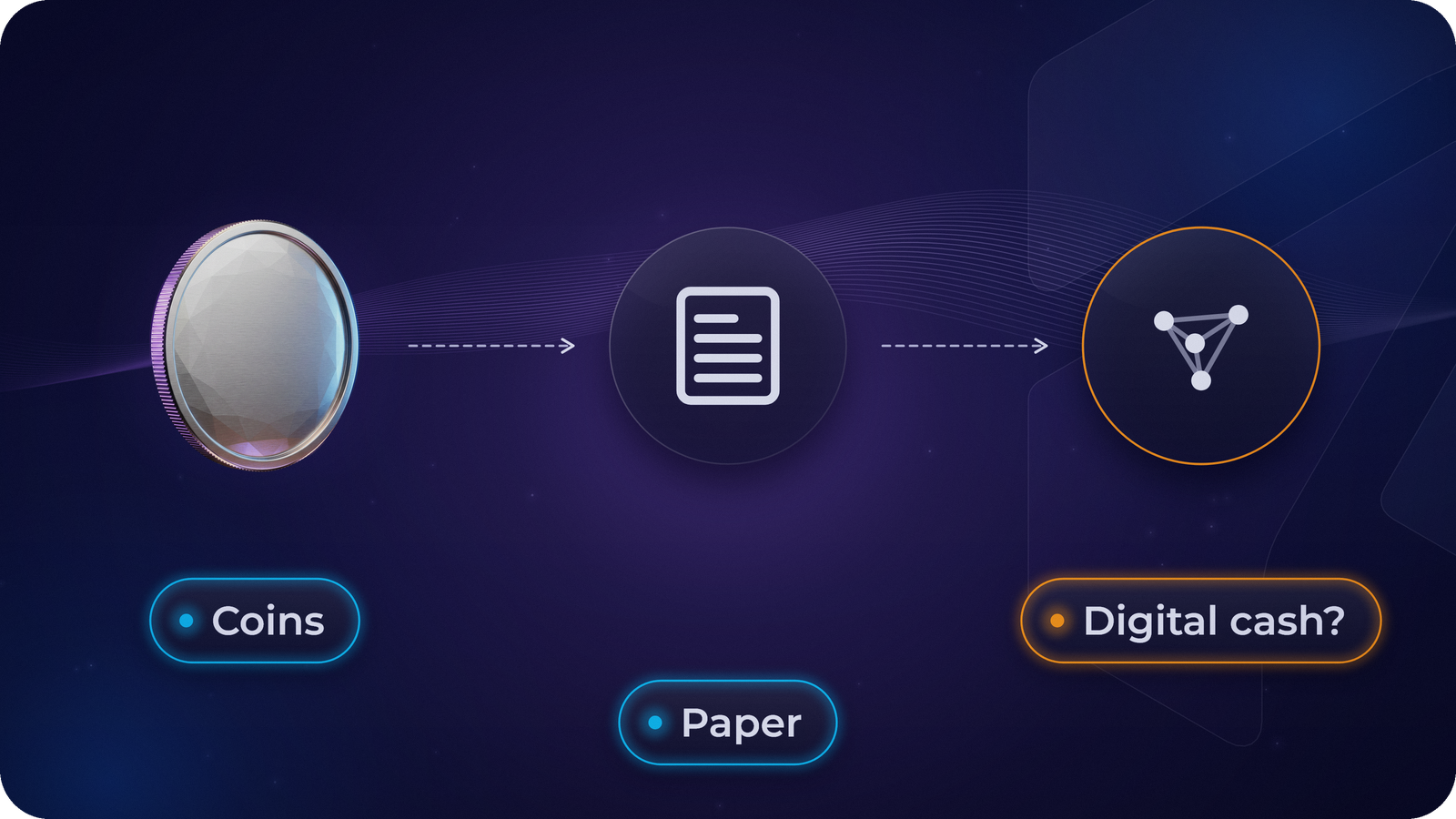
Salt, shells, metal coins, paper notes, numbers in a bank’s computer: money has changed form many times. What stays the same is that people agree to accept it.
By the 1980s most money was already digital, but only as entries in banks’ ledgers. Some computer scientists asked a bolder question: could there be digital cash, sent directly from person to person over a network, without a bank in the middle?
It took almost 30 years and several failed attempts before Bitcoin showed one way to do it. This lesson is about the attempts that came first, and why they didn’t last.
DigiCash and e-gold: digital money run by companies
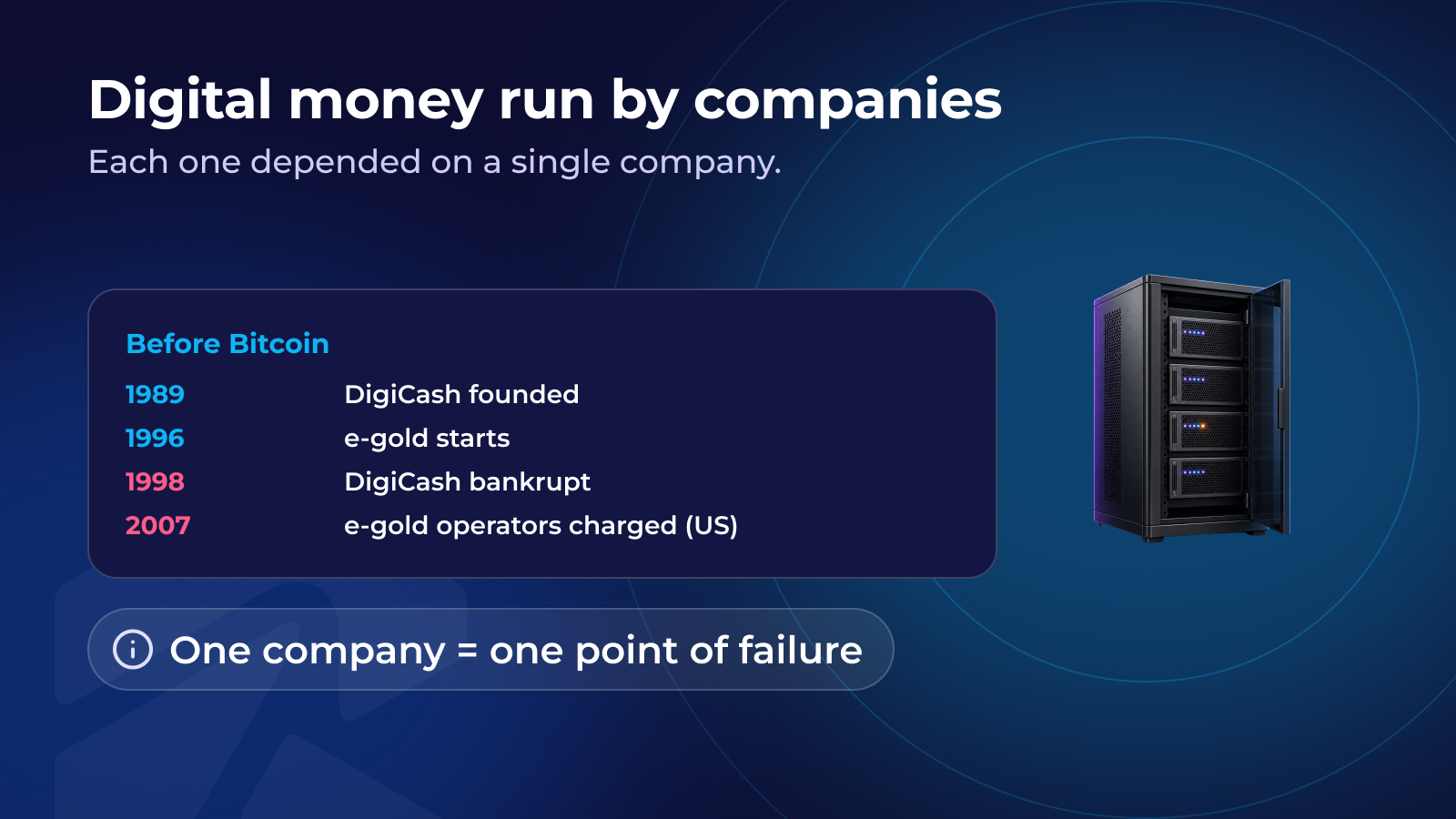
DigiCash was founded in 1989 by the cryptographer David Chaum. Its “eCash” let people pay online with strong privacy, using a clever kind of digital signature. A few banks tried it, but too few shops and users joined, and the company went bankrupt in 1998.
e-gold, started in 1996, let people hold and send accounts backed by gold stored in vaults. It grew to millions of accounts, but it was also used by criminals. In 2007 US prosecutors charged its operators, and the service later shut down.
Both had the same weak point: one company. When the company failed or was shut down, the money stopped working.
Quick check
Early digital money: e-gold had millions of accounts backed by gold in vaults. Why did it stop working for its users?
Why one company was needed
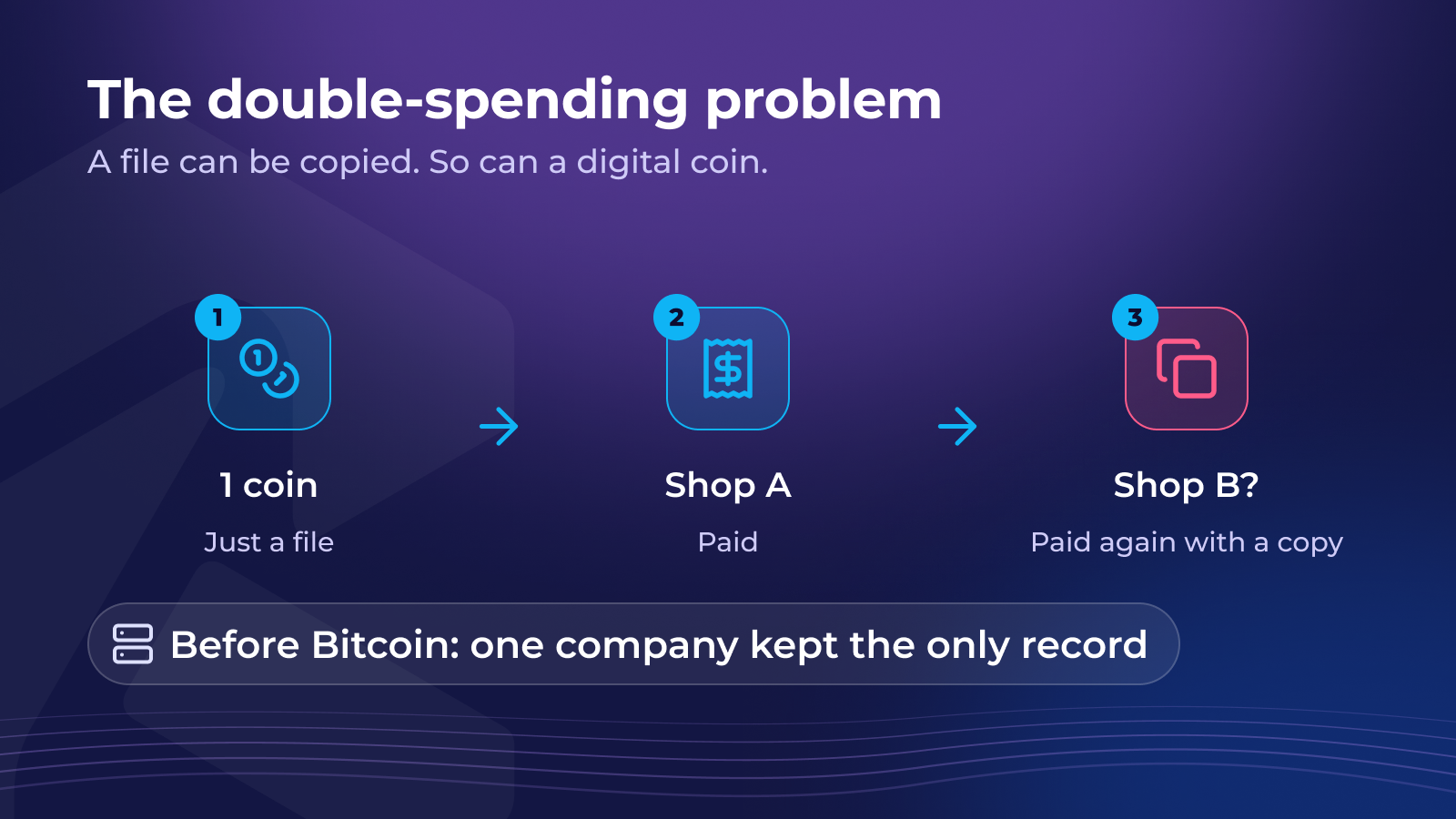
You can email the same photo to ten friends, because files can be copied. If a digital coin is just a file, what stops you from paying it to two shops? This is the double-spending problem.
Every system in this lesson solved it the same way: a trusted company kept the only record of who had spent what. That worked, but it also meant the company could fail, be hacked, or be shut down, and take the money with it.
The open question for the next decade was whether strangers on the internet could keep one shared record without that company. How Bitcoin answered it is explained in The Double-Spend Problem, part of the course Bitcoin, Step by Step.
Cypherpunk ideas: Hashcash, b-money and Bit Gold
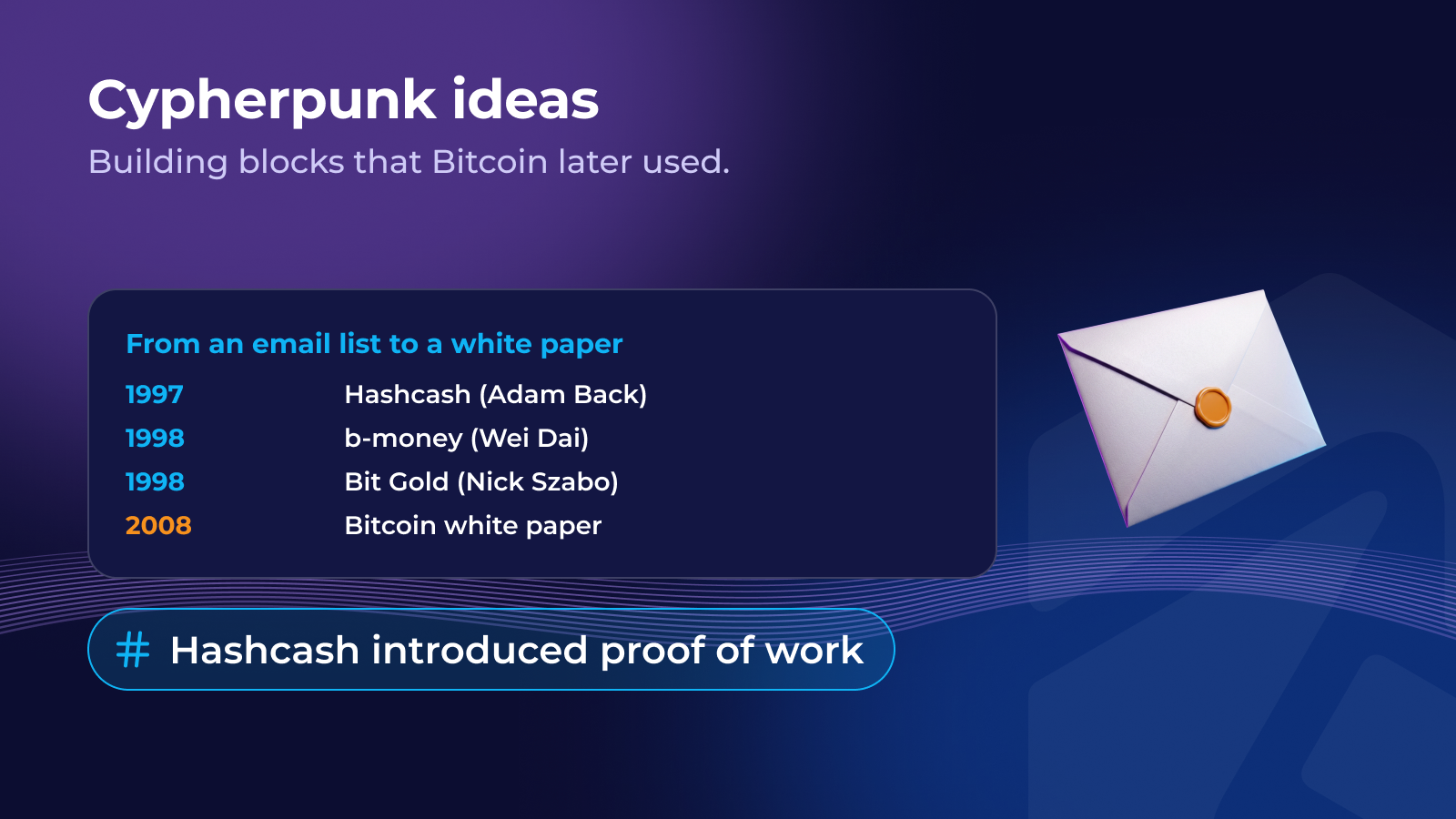
In the 1990s a group of privacy-minded programmers, the cypherpunks, shared ideas on an email list.
- Hashcash (Adam Back, 1997) made computers do a little work before sending an email, to make spam costly. This idea, called proof of work, later became the basis of Bitcoin mining.
- b-money (Wei Dai, 1998) described money kept by a group of participants instead of a bank.
- Bit Gold (Nick Szabo, designed in 1998) linked pieces of proof of work into a chain.
None of them launched as working money. But Bitcoin’s 2008 white paper cites both Hashcash and b-money, and combined these pieces into one system.
Quick check
Before Bitcoin: Hashcash made a computer do a little work before sending an email, to make spam costly. How did Bitcoin reuse that idea?
Quick check
A new app calls its coin “decentralised”, but one company keeps the only record of balances and can change it. Which pre-Bitcoin system does that resemble most?
Recap: before Bitcoin

Remember:
- Digital cash was tried long before Bitcoin: DigiCash (1989) and e-gold (1996) both depended on one company.
- That company was needed to stop double spending, and it was also the weak point.
- Cypherpunk ideas such as Hashcash and b-money became building blocks of Bitcoin.
How Bitcoin works: the course Bitcoin, Step by Step starts with 2008: Why Someone Built Bitcoin.
Lesson complete!
0 / 3
That's the first chapter. Continue this course — and unlock the rest — in the Rumos app.