Investing Basics: Saving, Investing, Risk and Return
Saving or investing?
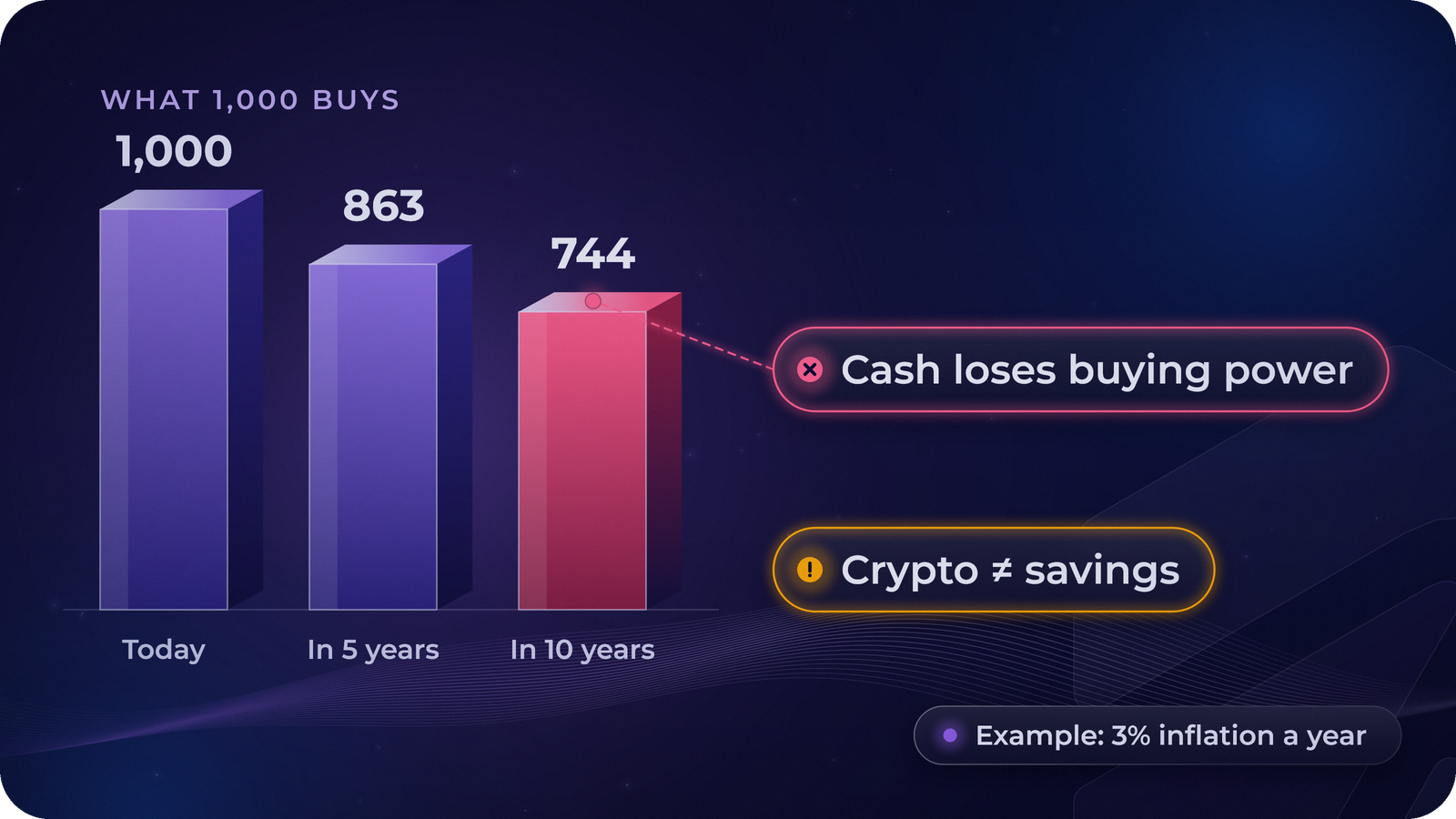
If prices rise 3% a year, €1,000 (or $1,000) kept in cash buys only about what €744 buys today after 10 years. That slow loss is called inflation.
Saving means keeping money stable and easy to reach, for example in a bank account. Bank deposits are protected up to a limit: in the EU usually €100,000 per person per bank, in the US $250,000 through the FDIC (as of October 2026).
Investing means buying assets that may grow in value over time, such as shares, bonds or property. The price of that possible growth is that the value can fall, sometimes a lot. Crypto is an investment asset, not savings: it is not a bank deposit and has no deposit protection.
Why people invest, and when it fits
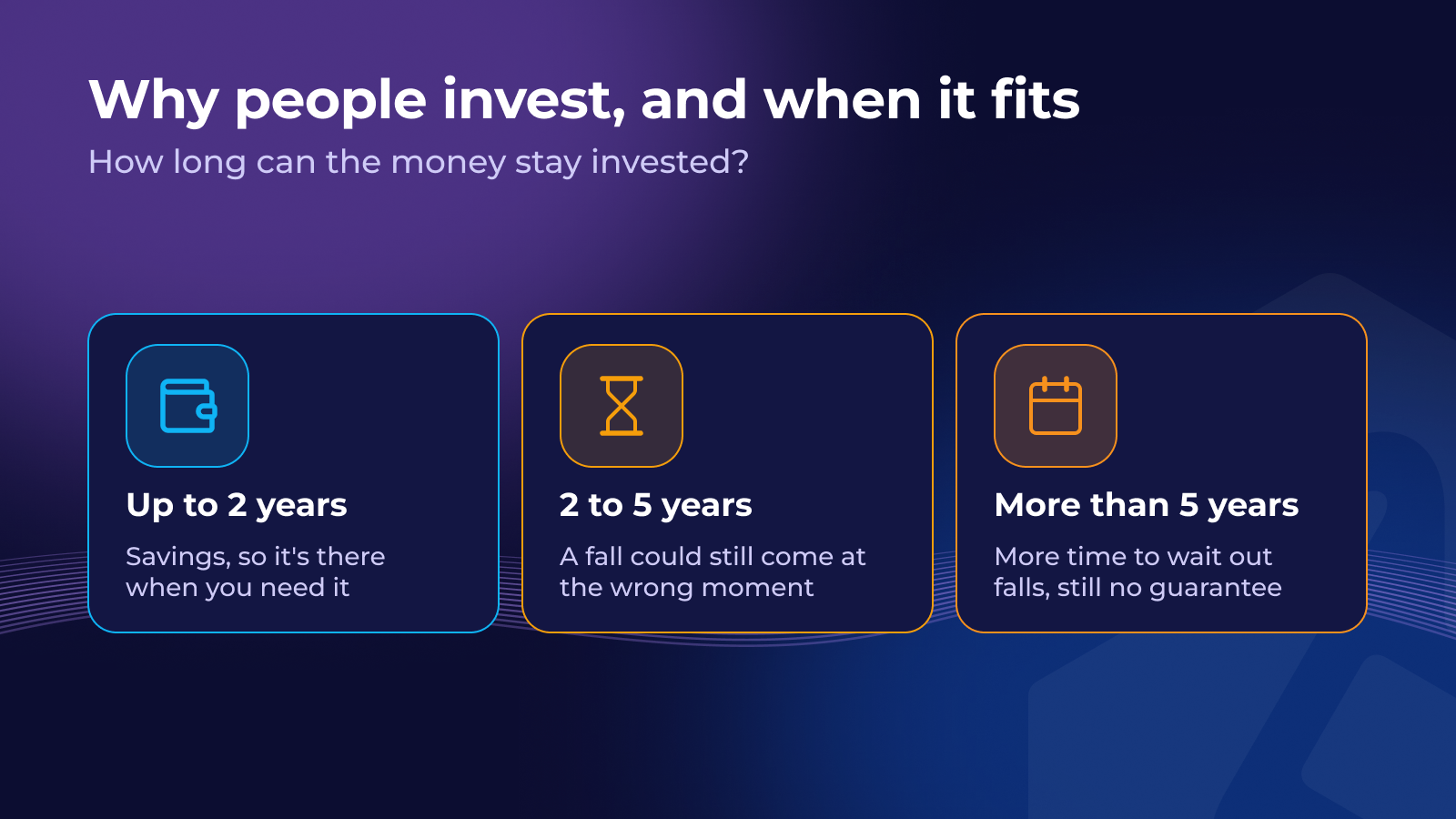
People invest to reach goals that are years away: a home, their children’s education, retirement. Over long periods, diversified investments in many countries have grown faster than prices, though not in every period, and some investments lost value. Over short periods, anything can happen.
That is why the time horizon matters: how long the money can stay invested before you need it.
- Up to two years: savings, so it is there when you need it.
- Two to five years: a fall could still come at the wrong moment.
- More than five years: more time to wait out falls, but still no guarantee.
Quick check
Jonas has money for a car he will buy next year and money he won’t touch for 25 years. How do saving and investing differ for these two pots?
Risk and return go together
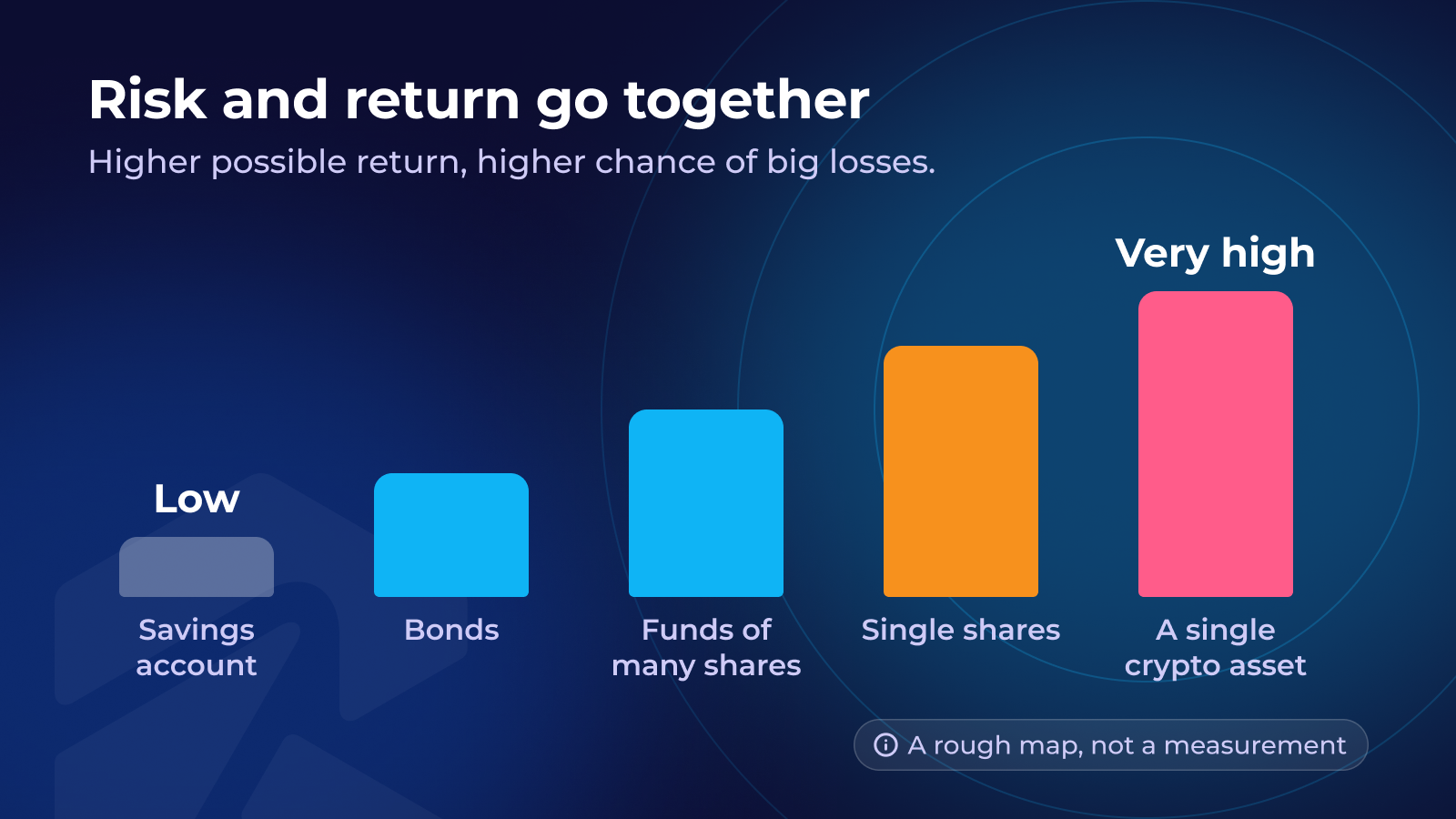
Return is what you gain or lose on an investment. Risk is how much and how often its value can fall.
The two are linked: assets with a higher potential return come with a higher chance of big losses. The reverse isn’t true: taking more risk doesn’t guarantee more return. Nobody can offer high returns without risk, and anyone who promises that is a red flag.
The chart is a rough map, not a measurement. A savings account barely moves. Funds of many shares move more. A single crypto asset sits at the far end: it can rise a lot, and it can lose most or all of its value.
The main asset classes
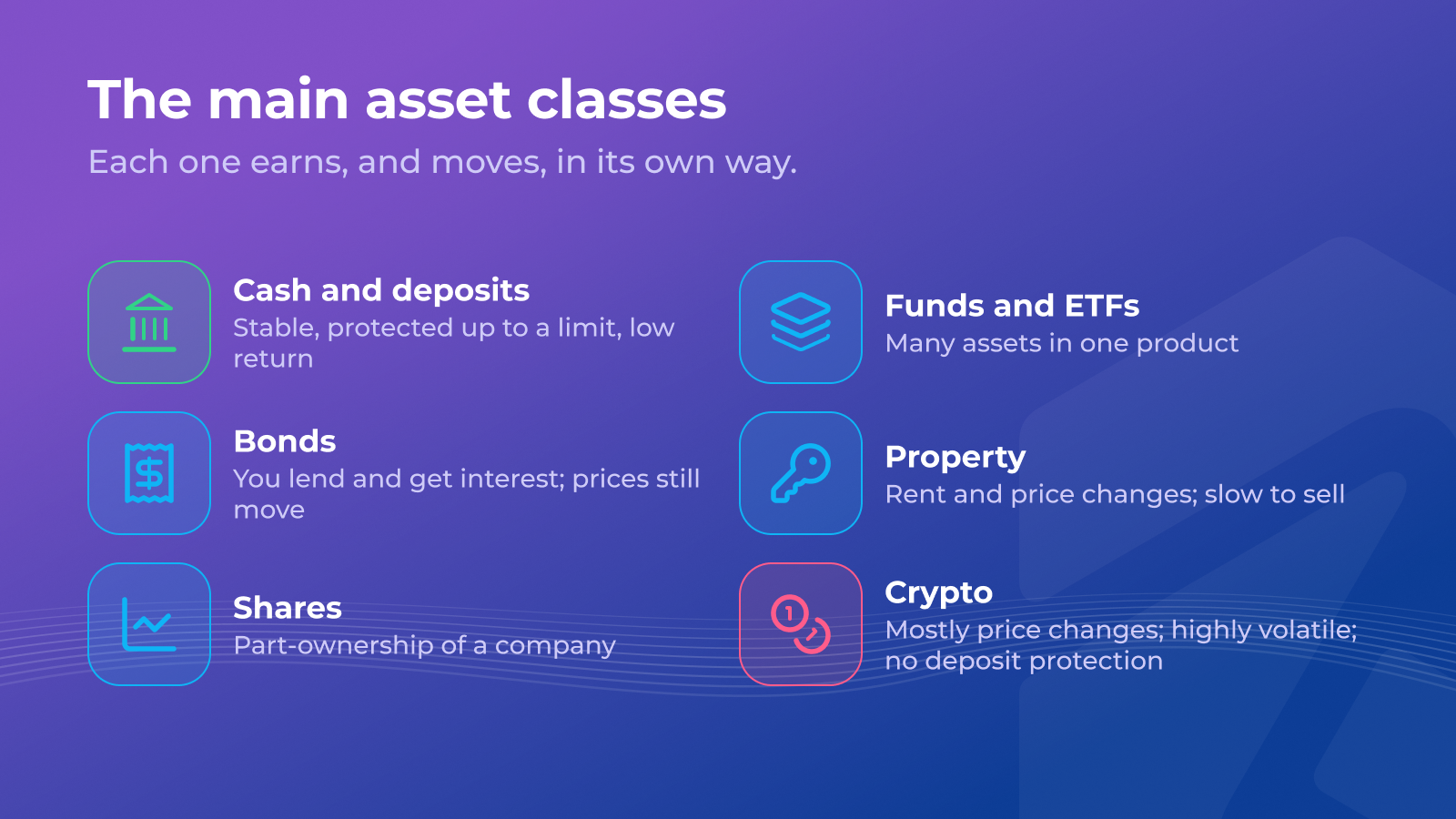
- Cash and deposits: stable, protected up to a limit, low return.
- Bonds: you lend money to a government or company and receive interest. Prices can still move.
- Shares (stocks): part-ownership of a company. Returns come from profits and price changes.
- Funds and ETFs: one product holding many assets, which spreads risk within the fund.
- Property: rent and price changes; hard to sell quickly.
- Crypto: young digital assets. Most coins pay no interest or profits, so returns come mainly from price changes. Highly volatile and not covered by deposit protection.
Quick check
Which statement about risk and return is accurate?
Compounding, and its flip side
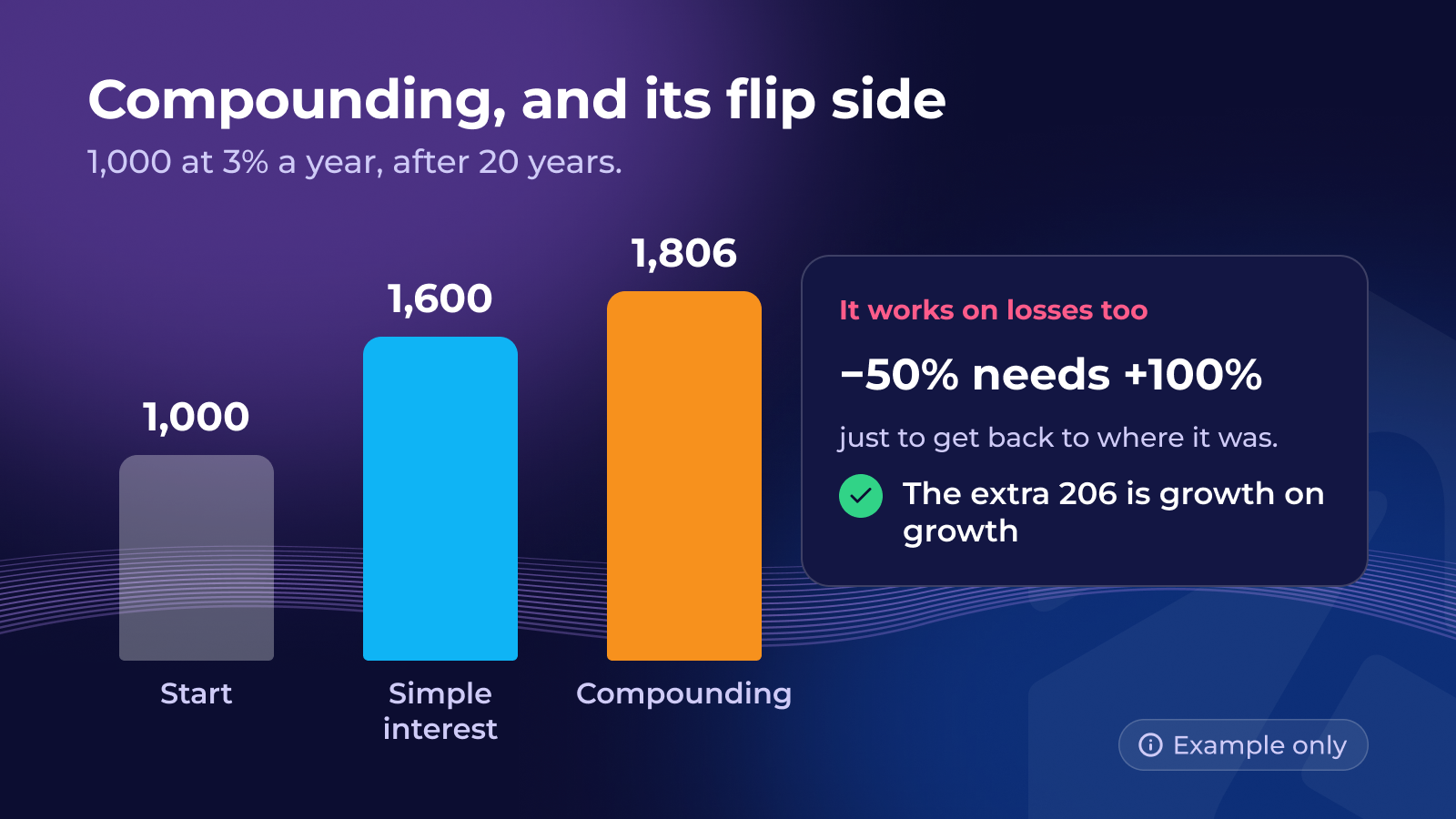
Compounding means earning returns on earlier returns. Example with a savings rate: €1,000 at 3% a year grows to about €1,806 after 20 years. With simple interest (3% of the original €1,000 each year) it would be €1,600. The extra €206 is growth on growth, and the gap widens with time.
Compounding works on losses too. If an investment falls 50%, it then needs to rise 100% just to get back to where it was.
This is why time and avoiding big losses matter more than chasing the highest number. And why nobody can promise how much an investment will grow.
Quick check
Which are sensible habits for a beginner investor? Select all that apply.
Select all that apply
Recap
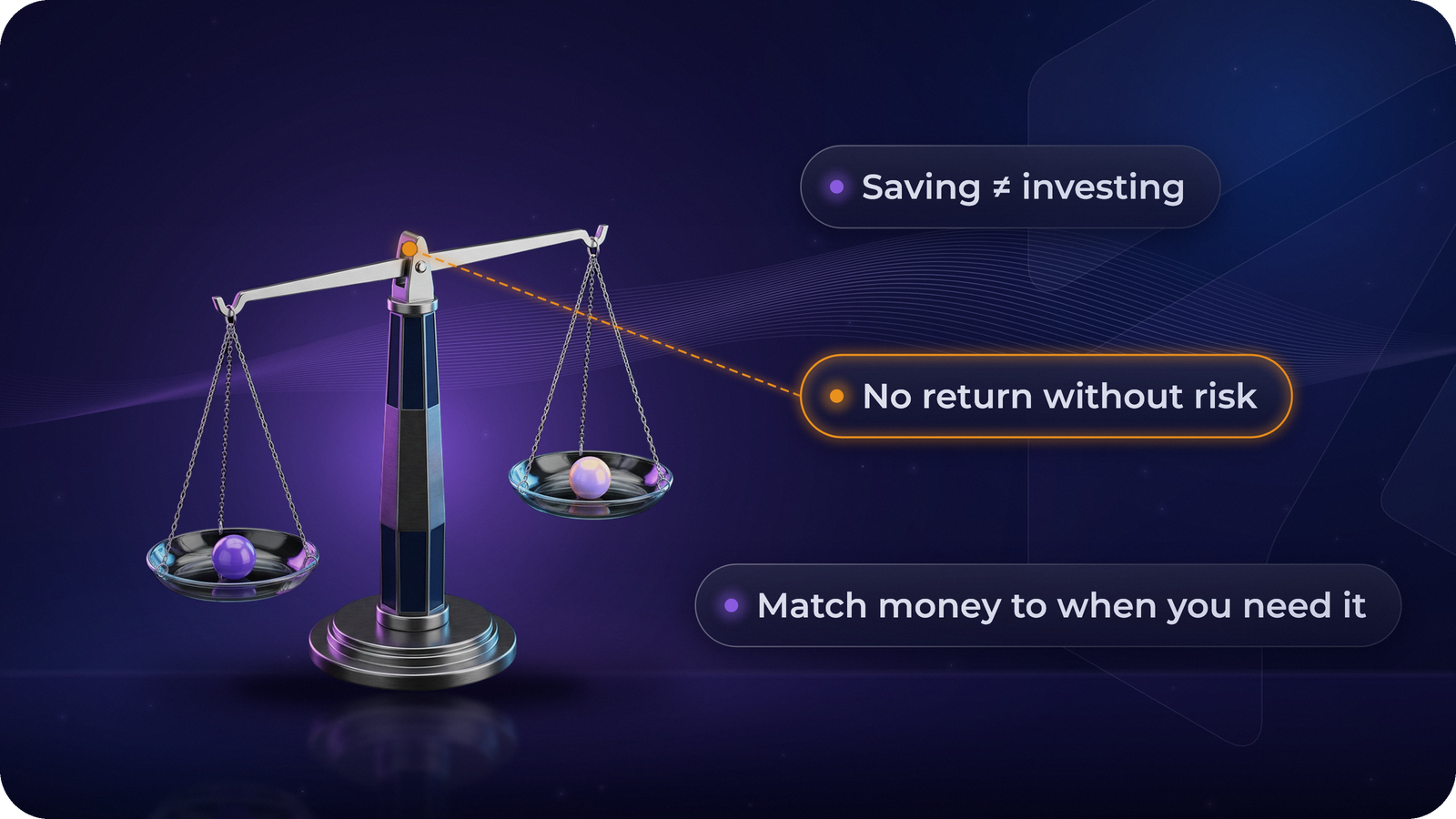
- Saving keeps money stable; investing accepts the risk of falls for the chance of growth.
- A higher potential return comes with a higher risk of loss; crypto is a high-risk asset, not savings.
- Match money to when you will need it.
Crypto prices can rise and fall sharply, and you could lose some or all of the money you put in. Crypto is not covered by deposit protection. This lesson is education, not financial advice.
Lesson complete!
0 / 3
That's the first chapter. Continue this course — and unlock the rest — in the Rumos app.