What Are Crypto Exchanges, Brokers and Apps?
Where people buy crypto
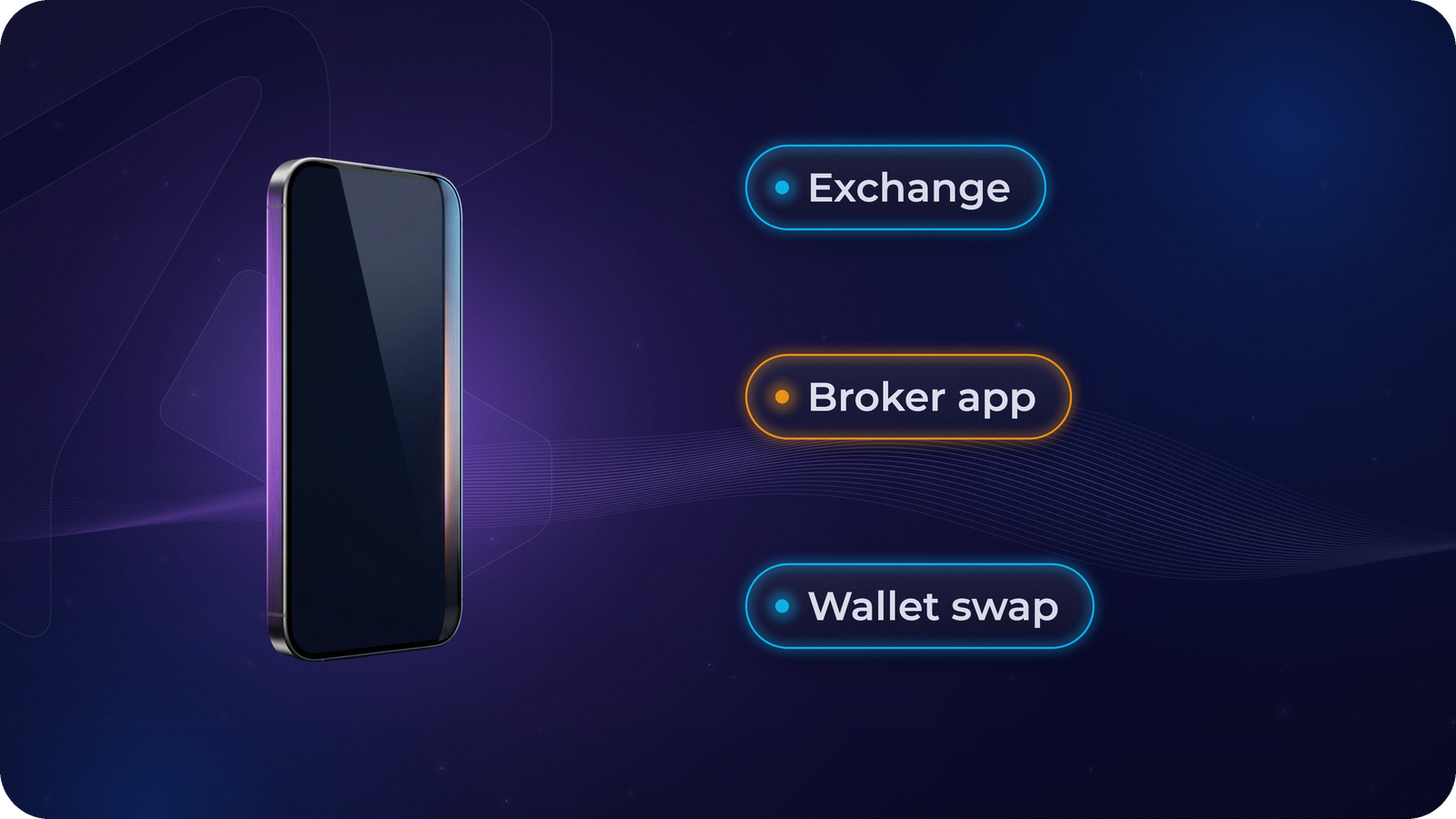
You can’t buy bitcoin at a bank counter. Most people buy crypto through one of three kinds of service:
- Exchanges, where many users place buy and sell orders and the exchange matches them.
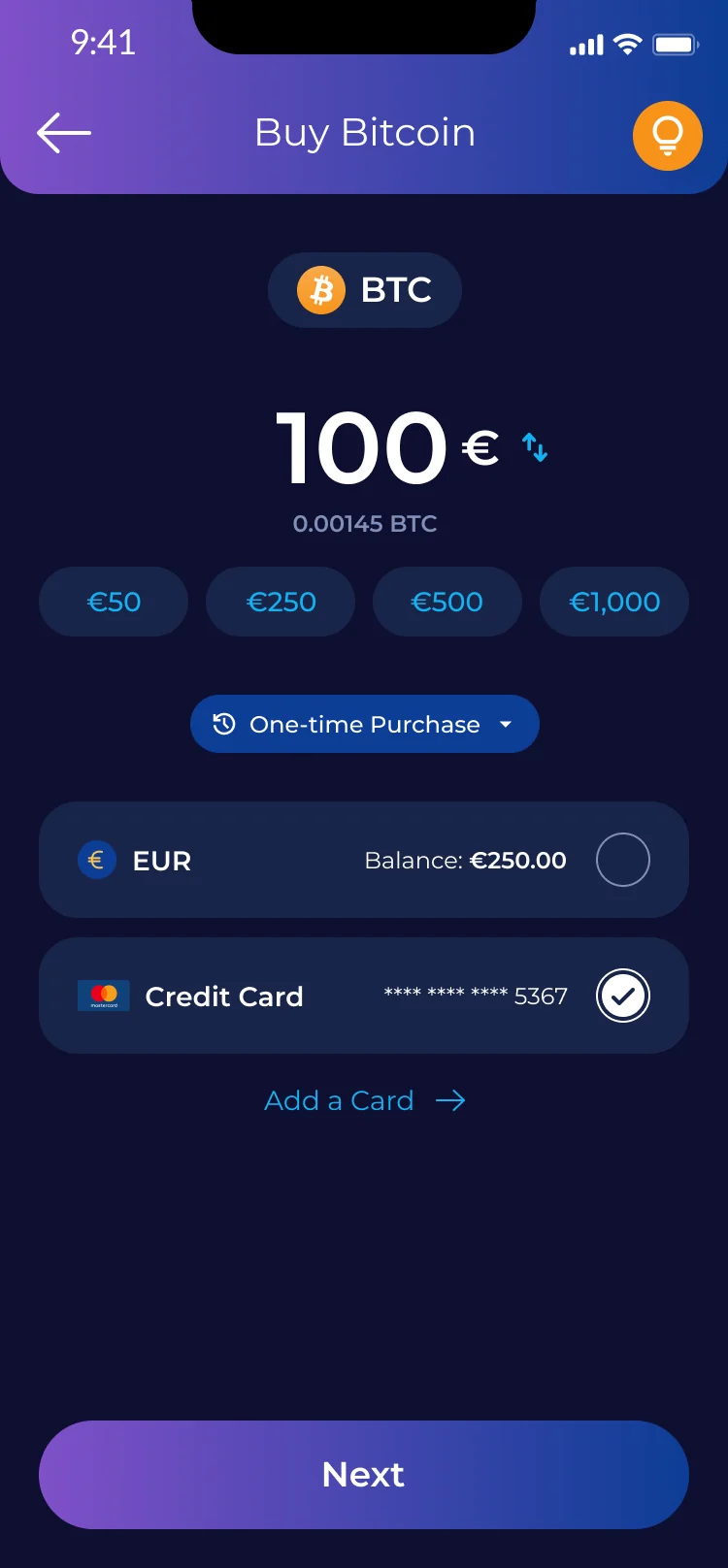
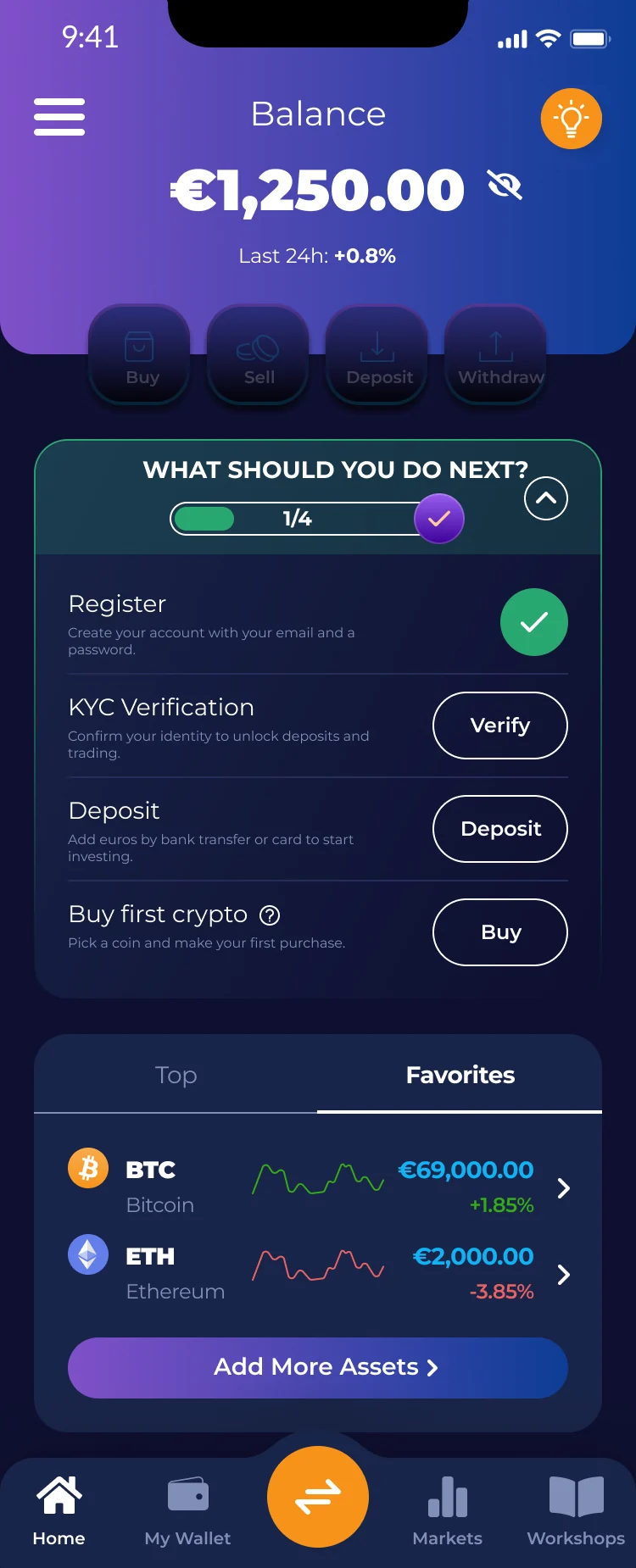
- Broker-style apps, where you buy at a price the provider quotes you. Rumos works this way.
- Wallet apps with built-in swaps, which connect you to other services.
All of them are reached through a website or a phone app. People often call all three “exchanges”. The difference matters for prices and for who holds your crypto, which the next lessons cover.
What they do for you
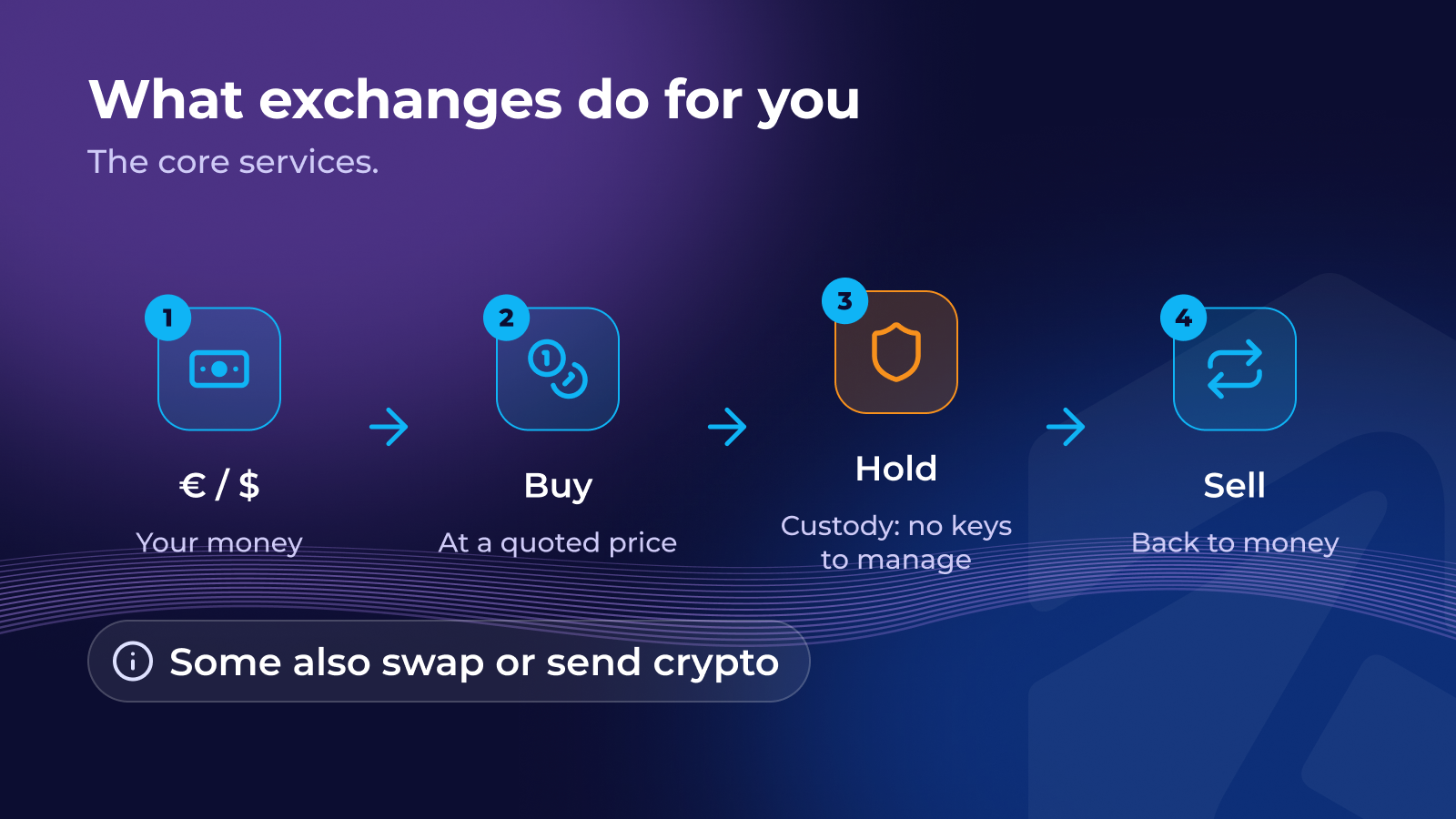
Buying and selling crypto for money such as euros or dollars.
Swapping one crypto for another, for example bitcoin for ether.
Holding your crypto for you (custody), so you don’t manage keys yourself. Some also let you send crypto to other wallets.
Extras on some platforms: lending, staking rewards, borrowed money (leverage) and derivatives. These add their own risks, and several of them aren’t covered by the EU’s crypto rules (MiCA). Rumos doesn’t offer leverage or derivatives.
Exchanges don’t create bitcoin. New coins come from the network itself, through mining or staking.
Quick check
Crypto exchanges and apps: where do new bitcoins come from?
Check before you use one
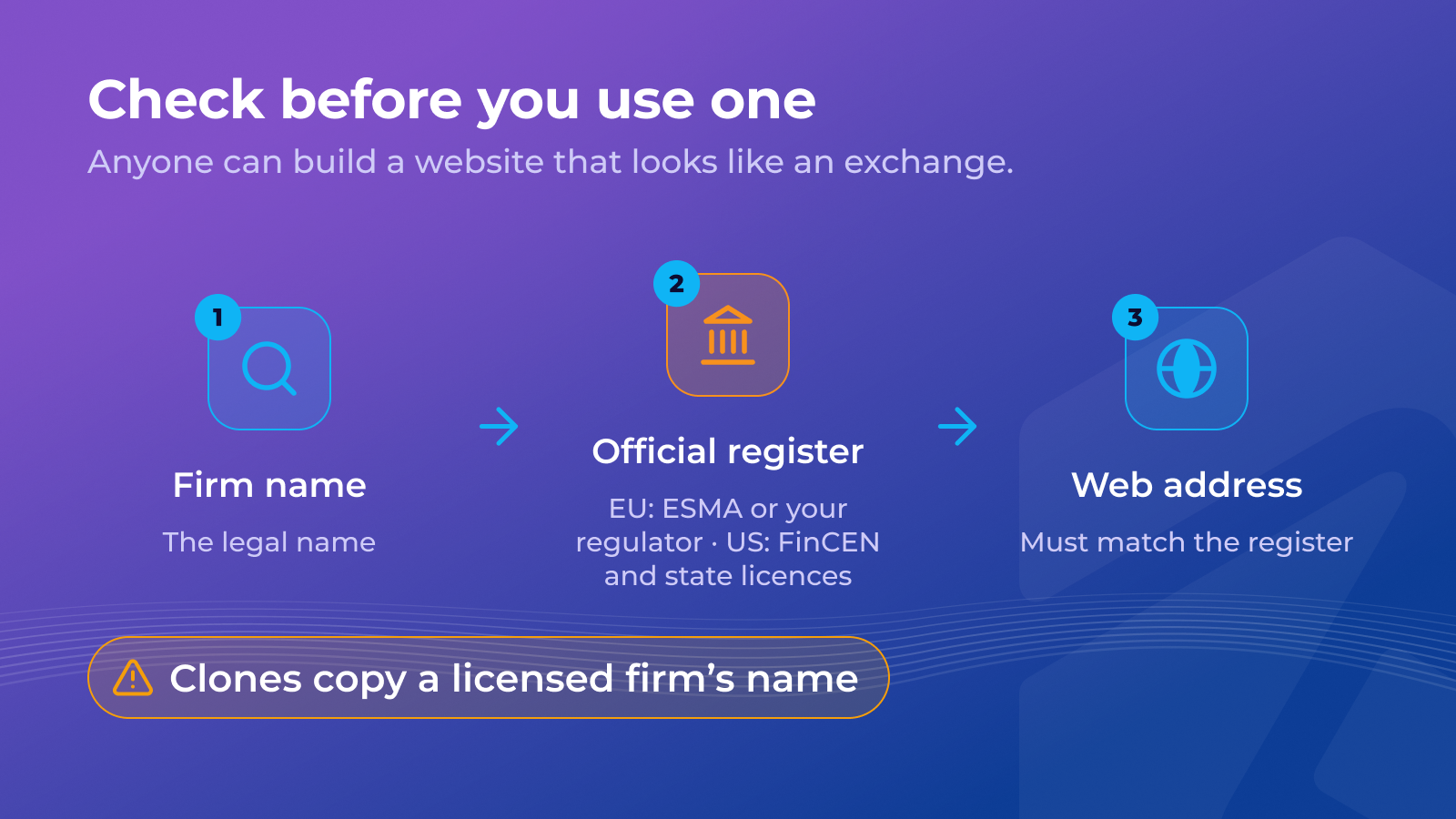
Anyone can build a website that looks like an exchange. Check first:
EU: under MiCA, crypto firms need authorisation as a crypto-asset service provider (CASP); by 1 July 2026 the transition period had ended in every member state (in many it ended earlier). Look the firm up in the register on ESMA’s website or with your national regulator, and check which services it may offer. If an app is built on a regulated partner, look up the firm that provides the service. In Rumos, that’s the custody partner named in the app under Settings.
US: crypto firms usually register with FinCEN (the Treasury’s financial-crimes office) and need state licences, such as New York’s BitLicense. If an app is built on a regulated partner, look up the firm that provides each service; the app’s terms say who does what.
Watch for clones that copy a licensed firm’s name: check the web address listed in the register.
Quick check
Crypto licences: an app is in ESMA’s register as authorised for custody only, but it also offers lending with “guaranteed” yields. What does the register tell you?
What a licence does and doesn’t mean
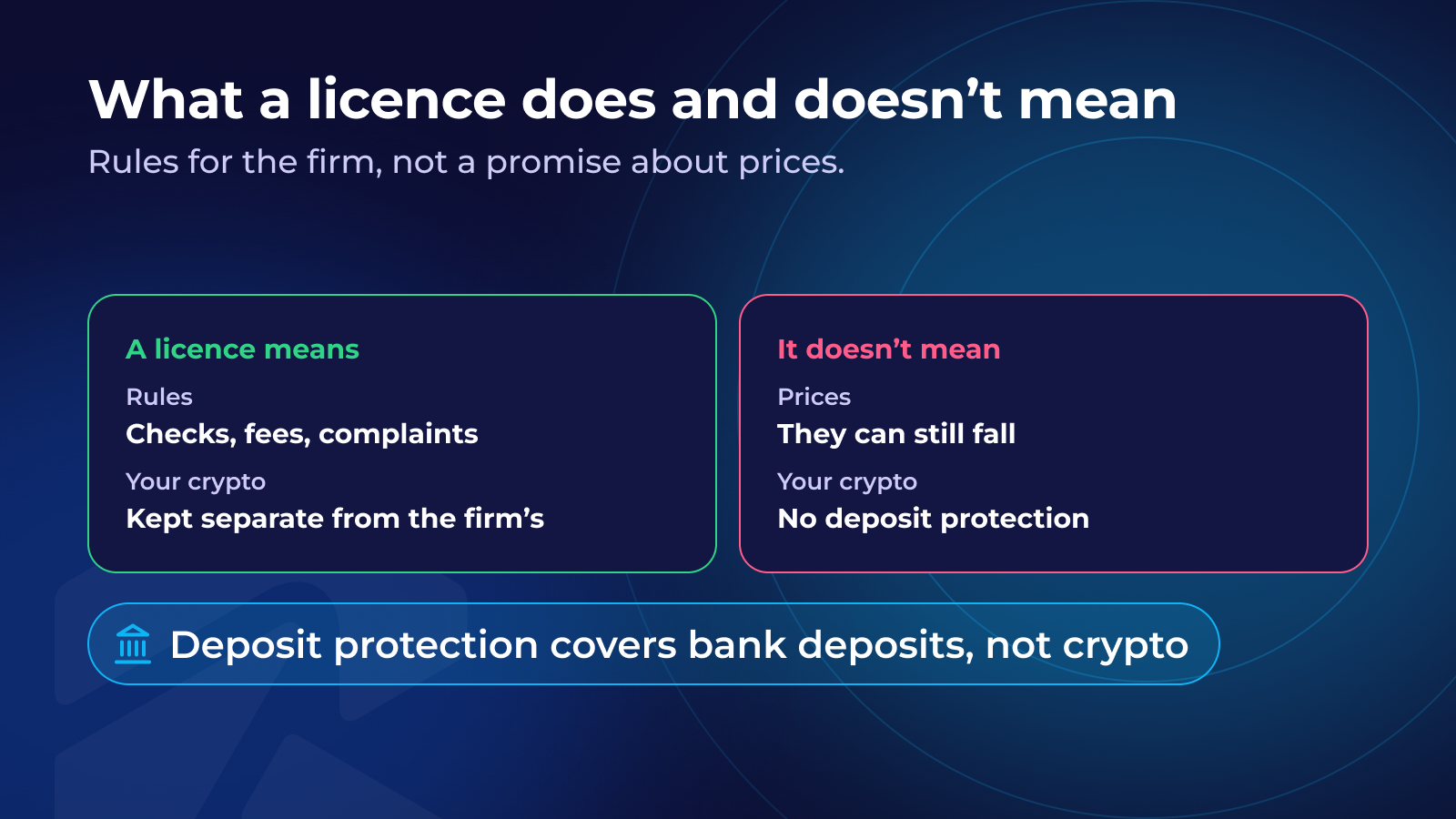
A licence means the firm must follow rules: check customers’ identity, keep customers’ assets separate from its own, explain its fees and handle complaints.
It doesn’t mean prices can’t fall, or that you get your money back if you lose it trading. Crypto is not covered by deposit protection (the EU deposit guarantee up to €100,000 per person per bank, or $250,000 through the FDIC in the US).
Why these rules matter: in November 2022 the exchange FTX collapsed after customers’ money was misused, and withdrawals froze.
Rumos is powered by a regulated custody partner: in the EU, a crypto-asset service provider licensed by Germany’s financial regulator (BaFin) under MiCA; in the US, a regulated trust company. Your crypto and your cash balance are held with this partner, which uses security built for institutions, for example multi-signature approvals and offline cold storage. You’ll find the partner’s name in the app under Settings.
Quick check
Crypto exchanges: in November 2022 the exchange FTX collapsed. What did many of its customers find?
Recap: exchanges, brokers and apps
Remember:
- Exchanges match users’ orders; broker-style apps like Rumos quote you a price.
- Check a provider on the official register, including which services it may offer, and watch for clone sites.
- A licence sets rules for the firm; it doesn’t protect you from price falls, and a failing firm can freeze withdrawals.
Crypto prices can rise and fall sharply, and you could lose some or all of the money you put in. Crypto is not covered by deposit protection. This lesson is education, not financial advice.
Lesson complete!
0 / 3
That's the first chapter. Continue this course — and unlock the rest — in the Rumos app.