What Is Trading? An Honest Look
Trading and investing: same button, different habits
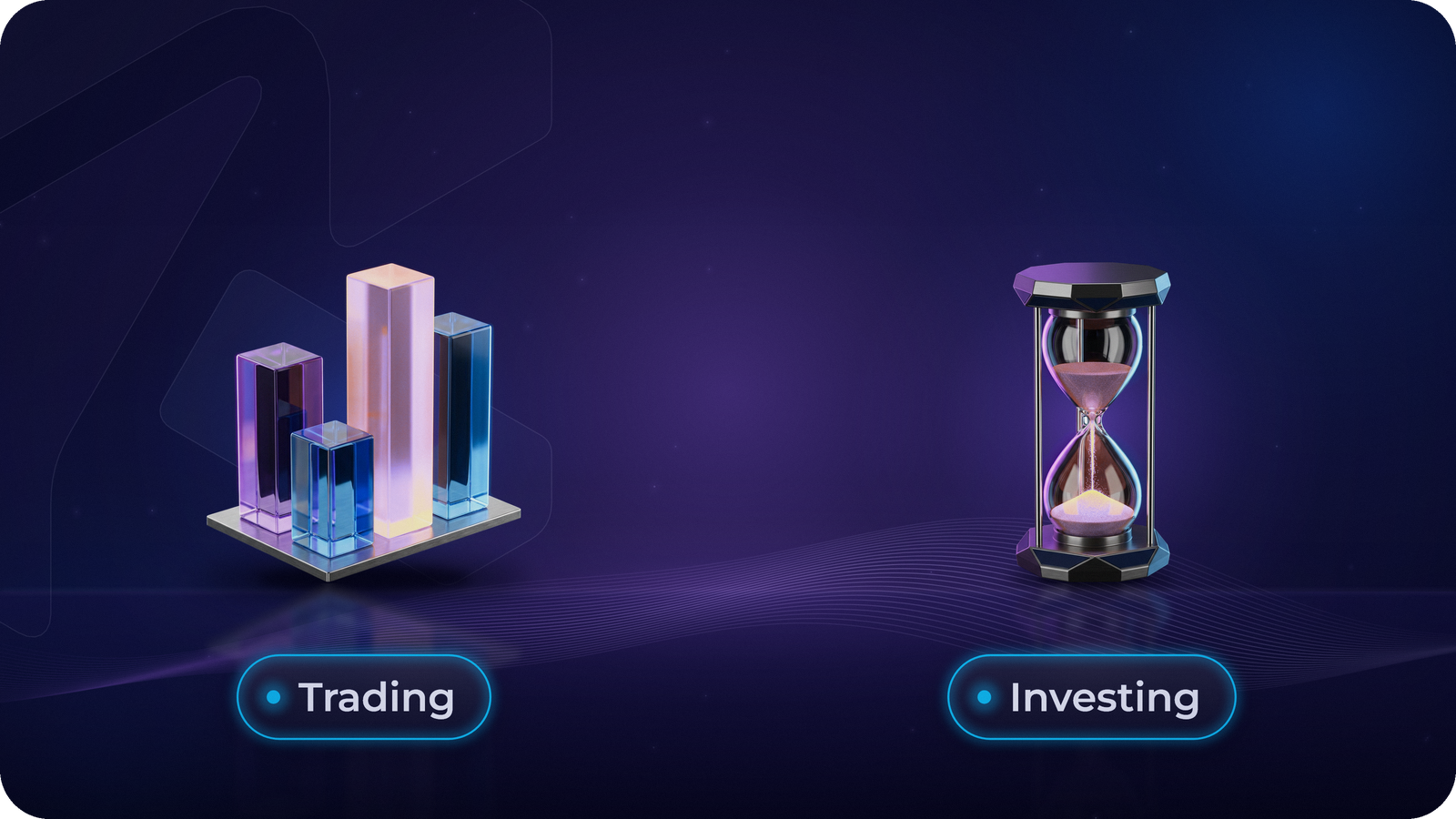
Mia and Ben buy the same coin on the same day. Mia plans to sell within a few days if the price rises. Ben plans to hold it for years as part of a plan. They pressed the same button, but they are doing different things.
Trading means buying and selling to profit from price changes, often over minutes, days or weeks. Investing means buying something to hold for a long time, based on a plan and a reason to own it.
People trade all kinds of assets: shares, bonds, currencies, commodities such as gold and oil, and crypto. The difference that matters most for you is not the asset. It’s how often you buy and sell, and why.
Quick check
Trading or investing? Leo buys and sells the same coin six times this week to catch small moves. Sara buys once and plans to hold for years. What is accurate?
Styles of trading, and where it happens
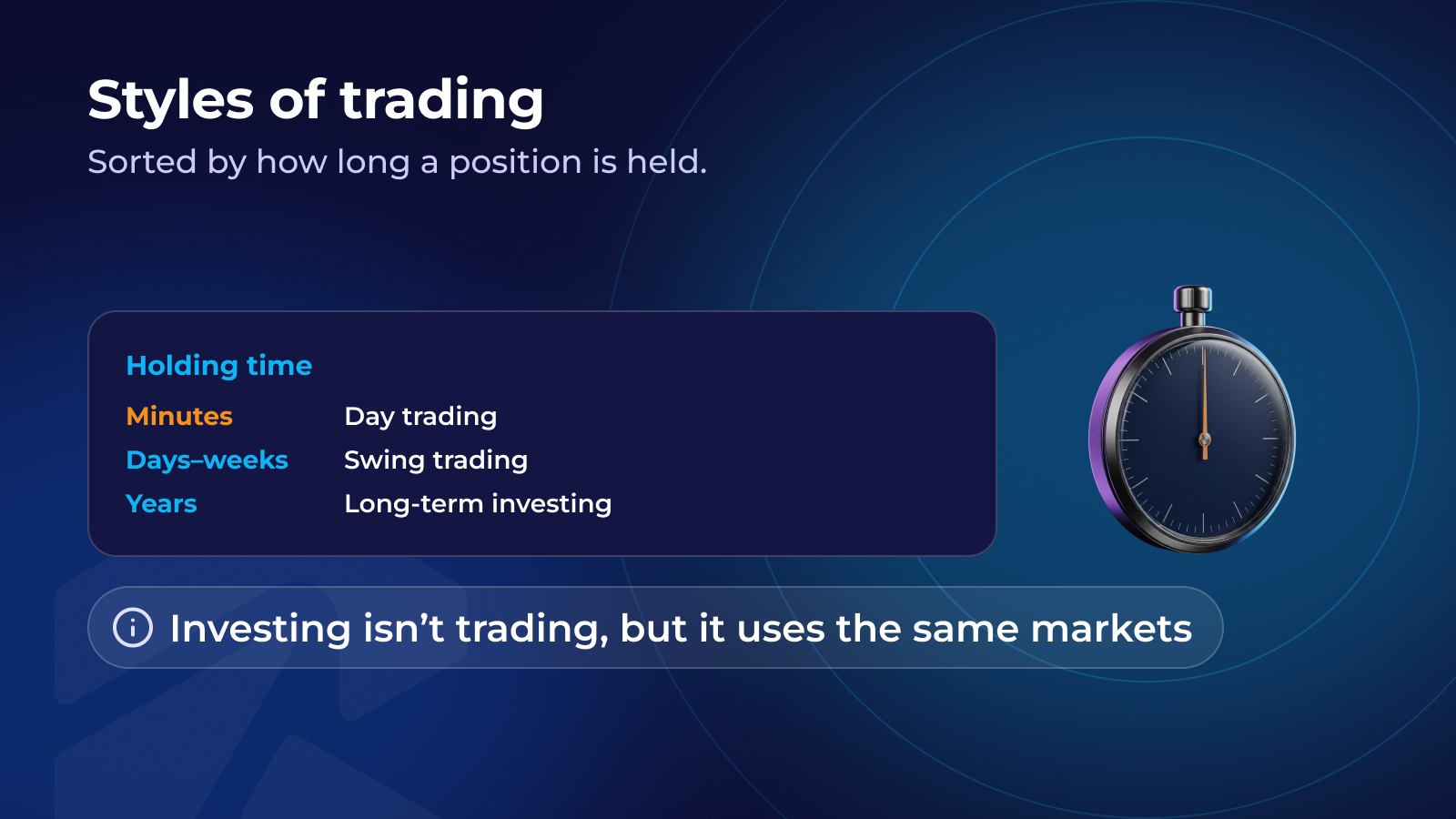
Day trading: opening and closing positions within the same day, sometimes dozens of times.
Swing trading: holding for days or weeks to catch a bigger move.
Long-term investing: buying to hold for years, perhaps adding regularly. It isn’t trading, but it uses the same markets.
Where: shares trade on stock exchanges such as the New York Stock Exchange. Crypto trades on crypto exchanges and in broker-style apps. Some platforms also offer borrowed money (leverage) and derivatives, which multiply both gains and losses. Rumos doesn’t offer leverage or derivatives: you buy and sell the crypto itself, at a quoted price.
Crypto markets never close, which makes it tempting to check prices and trade at any hour.
What the evidence says
Trading is sold as exciting. The research is less exciting.
Costs add up. Every round trip, a buy and a later sell, pays the spread and any fees. More trades mean more costs.
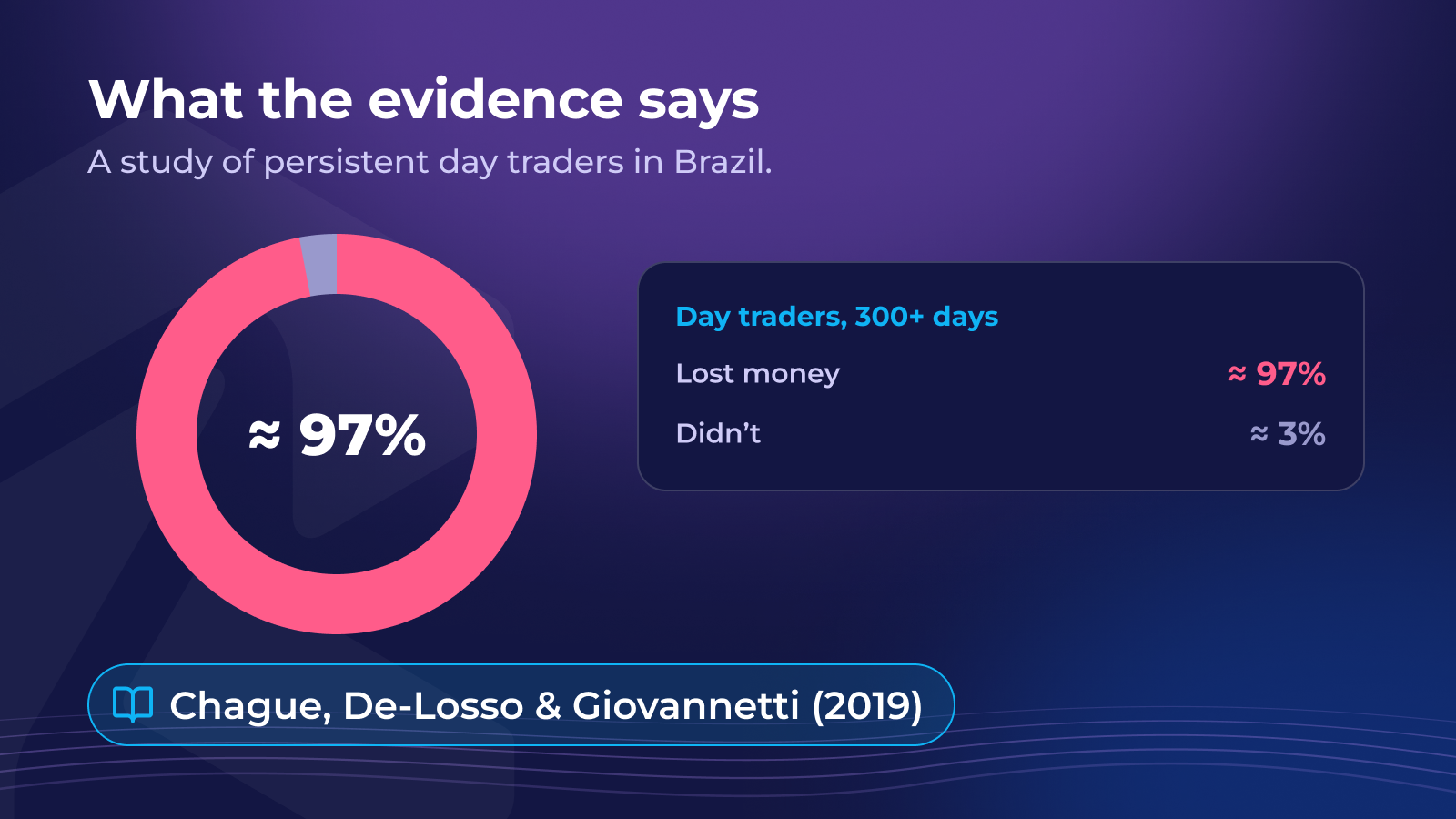
Studies of real traders. A well-known study of US households in the 1990s found that the households that traded most earned less than the market average, mainly because of costs. That was a strong period for US shares; markets can also fall for years. A 2019 study of people in Brazil who started day-trading futures between 2013 and 2015 and kept going for at least 300 days found that about 97% of them lost money.
These are stocks and futures, not crypto. But they show the pattern: frequent trading usually costs individuals more than it earns. Past performance is not a reliable indicator of future results.
Quick check
What do large studies of individual day traders generally find?
Before you trade: five honest questions
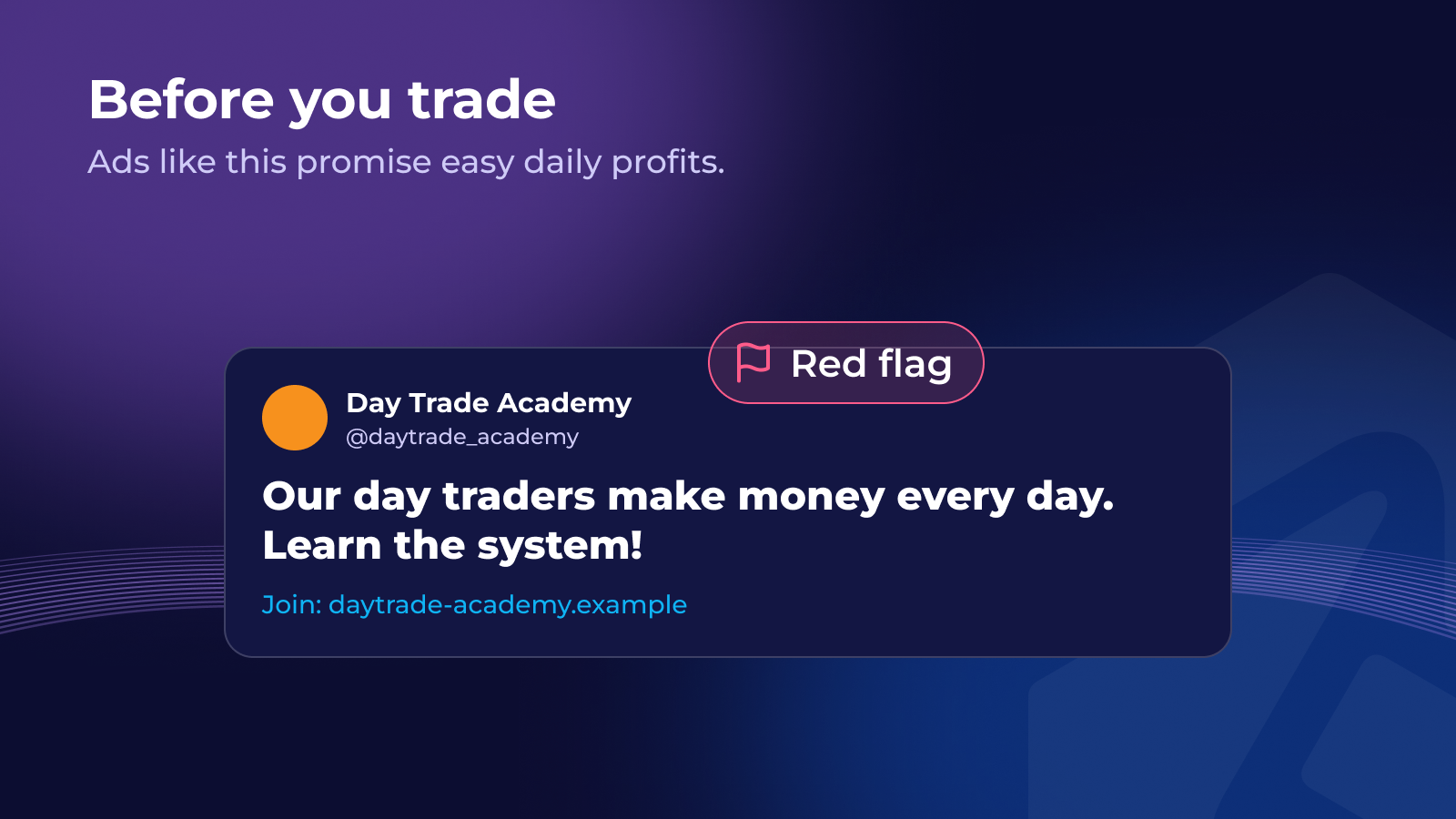
Ads like the one in the picture promise easy daily profits. Before you buy and sell often, ask yourself first:
- Am I investing or trading? Both are choices; mixing them up leads to decisions you didn’t plan.
- What’s my plan? Why am I buying, and when would I sell?
- What does one round trip cost? Check the spread and fees on the confirmation screen.
- Can I afford to lose this money? Only use money you can afford to lose.
- Am I reacting? A headline, a chat or a sudden price jump is a reason to pause, not to click.
None of these needs a prediction. They help you decide on purpose instead of in the moment.
Quick check
An ad says: “Our day traders make money every day. Learn the system.” What’s the best reading?
Recap: trading, honestly
Remember:
- Trading tries to profit from short-term price moves; investing holds for years based on a plan.
- Every trade has costs, and studies find most frequent traders do worse than the market average after costs.
- Ask the five questions before you buy and sell often.
Going further: Why Trading More Costs More shows the numbers behind the cost of trading often.
Crypto prices can rise and fall sharply, and you could lose some or all of the money you put in. Crypto is not covered by deposit protection. This lesson is education, not financial advice.
Lesson complete!
0 / 3
That's the first chapter. Continue this course — and unlock the rest — in the Rumos app.