What Is a Crypto Wallet?
Where are your coins, really?
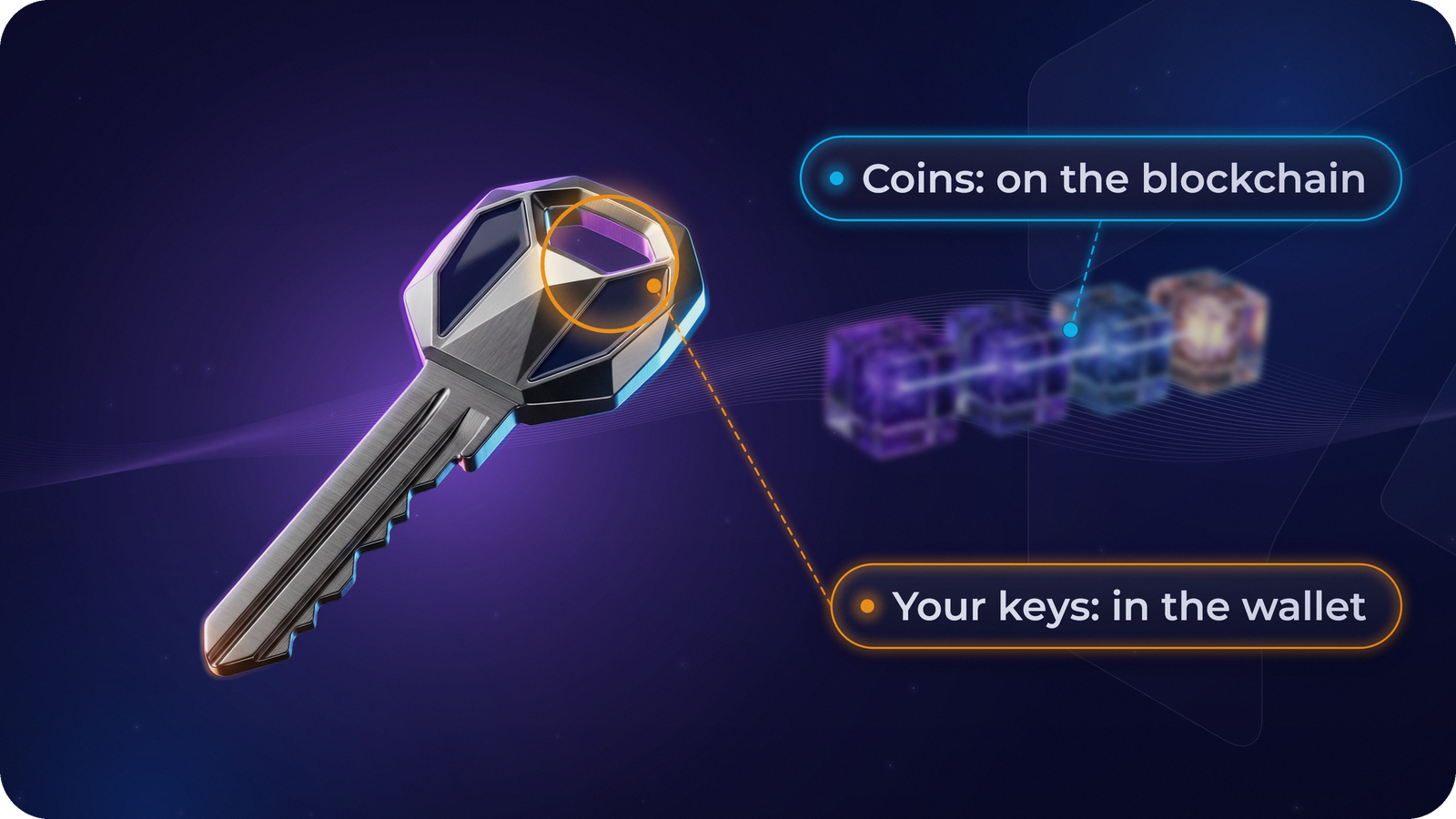
Quick question: when you open a crypto wallet app, where are your coins? Not on your phone.
Crypto lives on a blockchain, a shared record kept by thousands of computers. It records which address holds how much. Your coins never leave that record, not even when you “send” them; the record is simply updated.
So what does a wallet do? It stores your keys: the secret that proves an address is yours and lets you move what it holds. A crypto wallet is less like a purse and more like a keyring.
That is why people say: lose the keys, lose the crypto. The coins are still on the blockchain, but nobody can move them any more.
Quick check
What does a crypto wallet actually store?
What a wallet lets you do
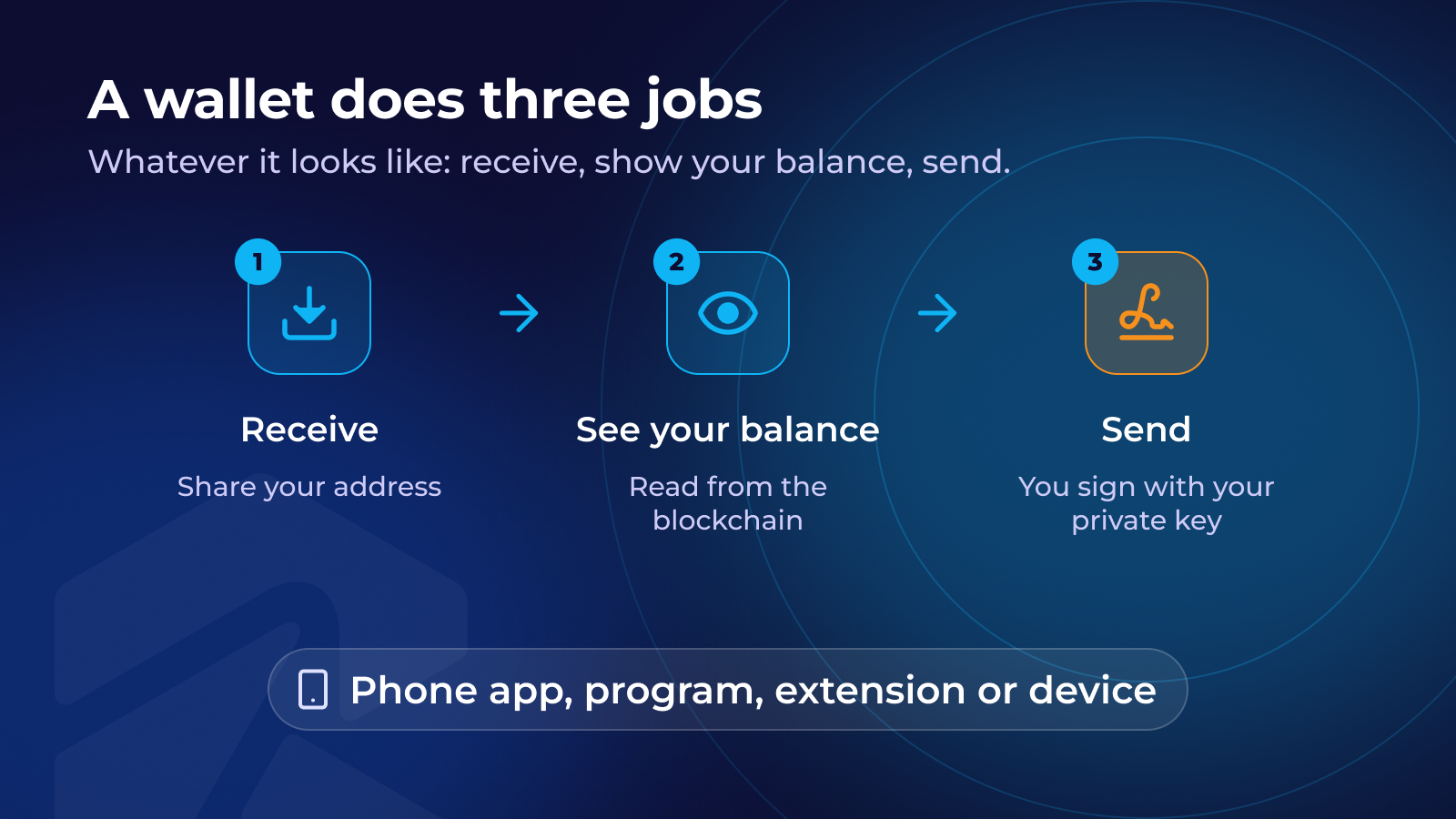
Every wallet, whatever it looks like, does three jobs:
- Receive. You share an address, a long string of letters and numbers. Anyone can send crypto to it, a bit like an account number.
- Show your balance. The wallet reads the blockchain and shows what your addresses hold.
- Send. When you send, the wallet uses your private key to sign the transaction. The network checks that signature before it accepts the transfer.
Wallets come as phone apps, computer programs, browser extensions and small hardware devices. People also group them by one question: are the keys kept online or offline?
Hot or cold?
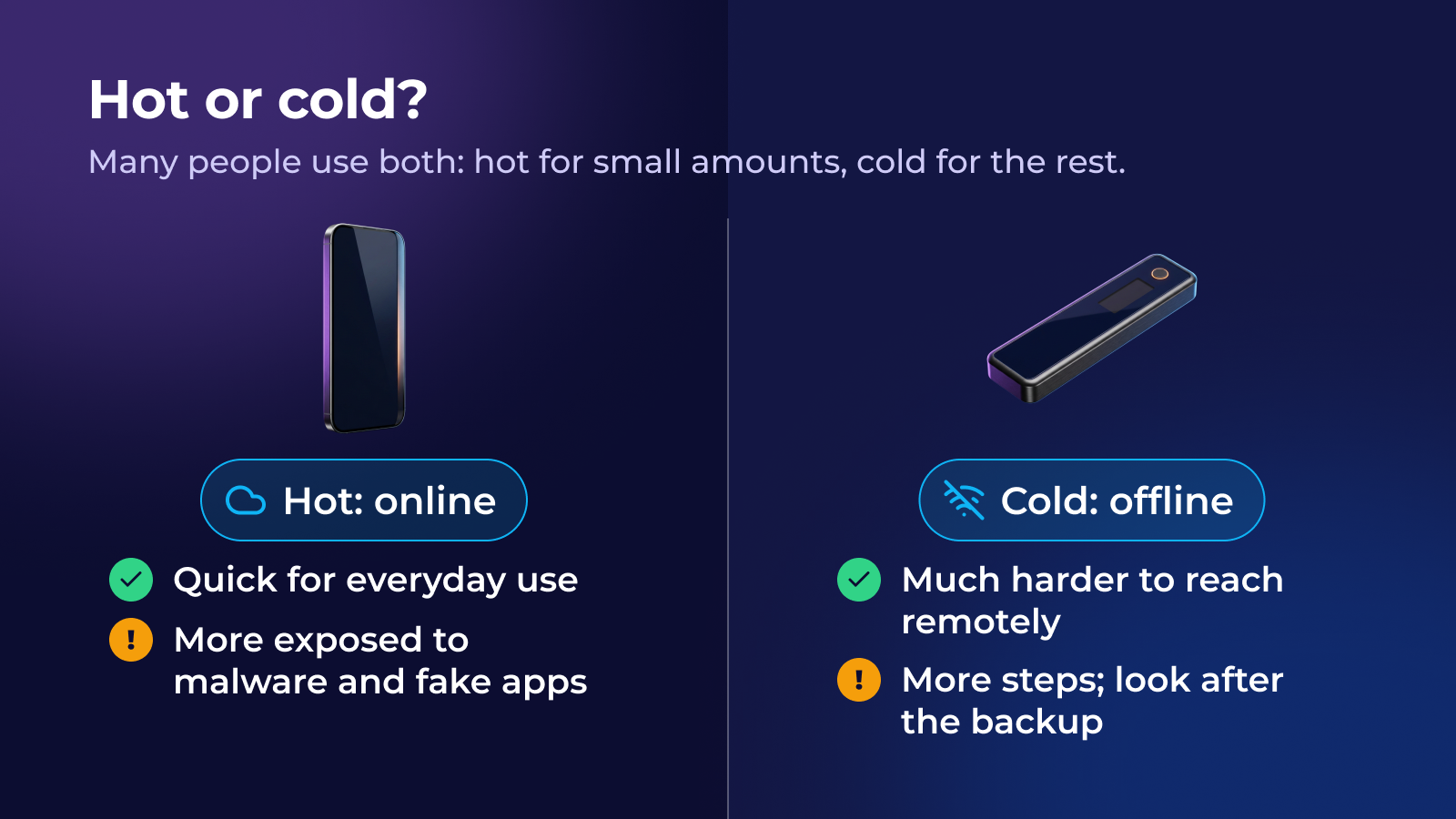
A hot wallet keeps its keys on a device that is connected to the internet, such as your phone. It is quick and convenient for everyday use, but it is more exposed to malware, hacked devices and fake apps.
A cold wallet keeps its keys offline, usually on a small hardware device. Getting at the keys remotely is much harder, but it takes more steps to use, and you have to look after the device and its backup.
Many people who manage their own keys use both: a hot wallet for small, everyday amounts and a cold wallet for the rest. There is a whole lesson on cold wallets later in this course.
Quick check
Marko keeps a crypto wallet app on his phone, which is always online. What kind of wallet is it?
Who holds the keys?
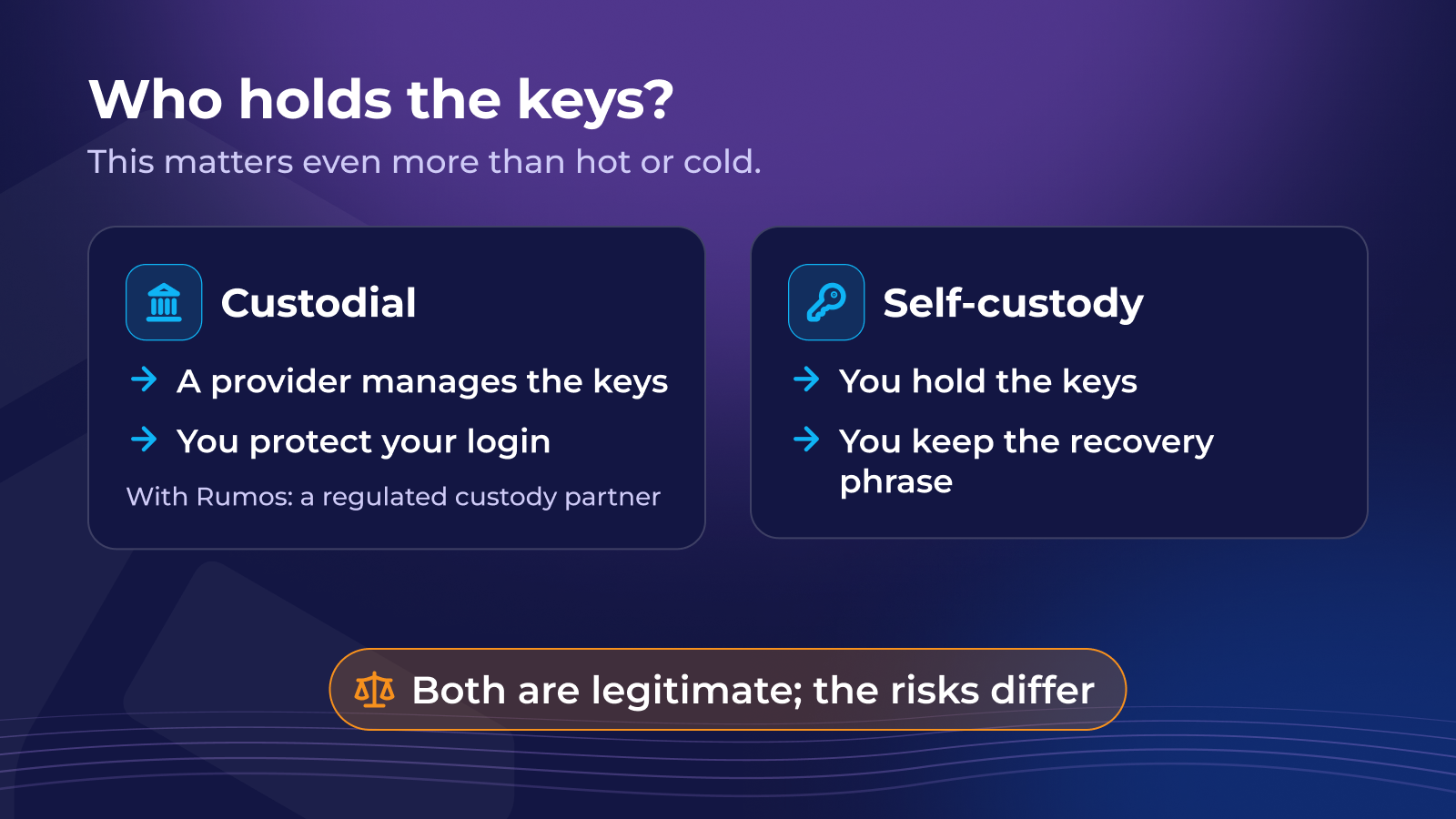
One more question matters even more than hot or cold: who holds the keys?
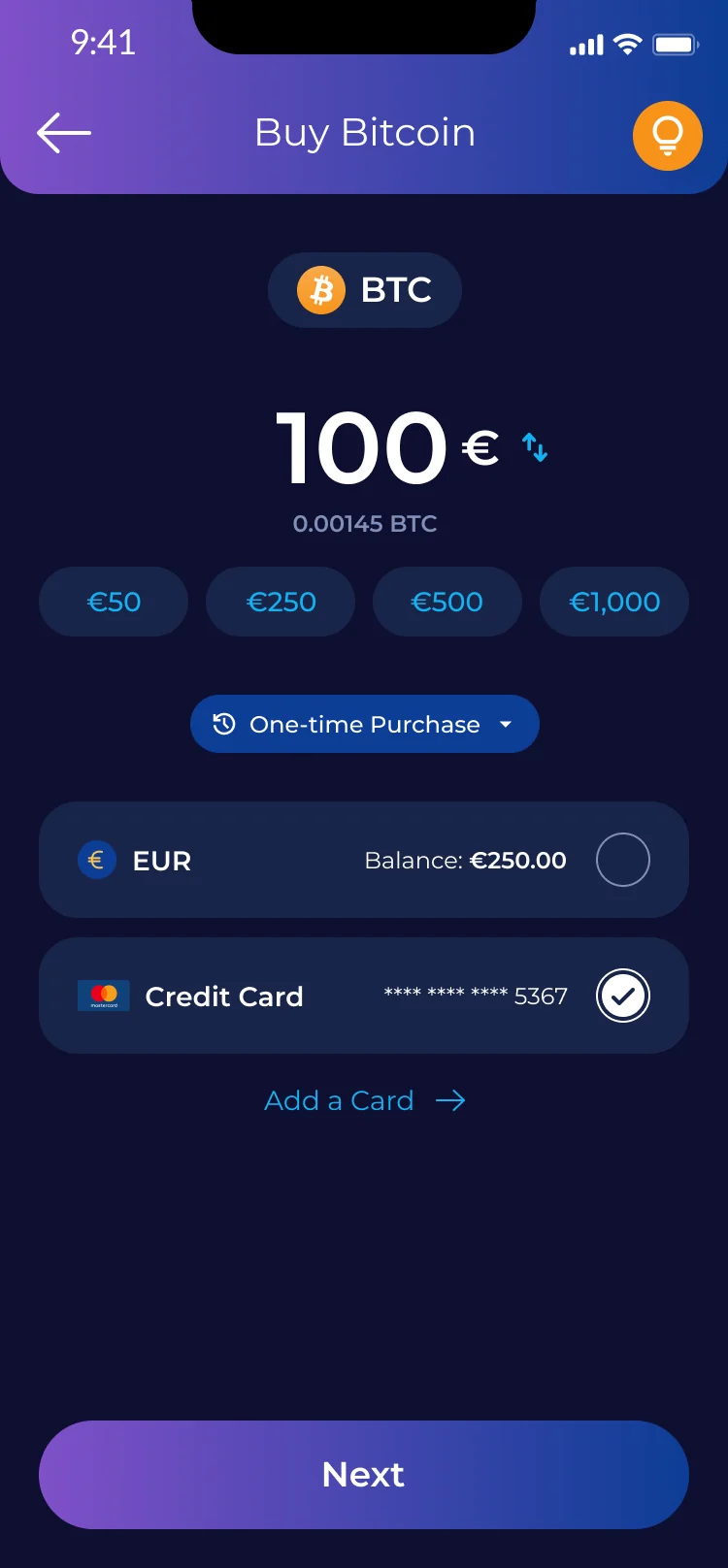
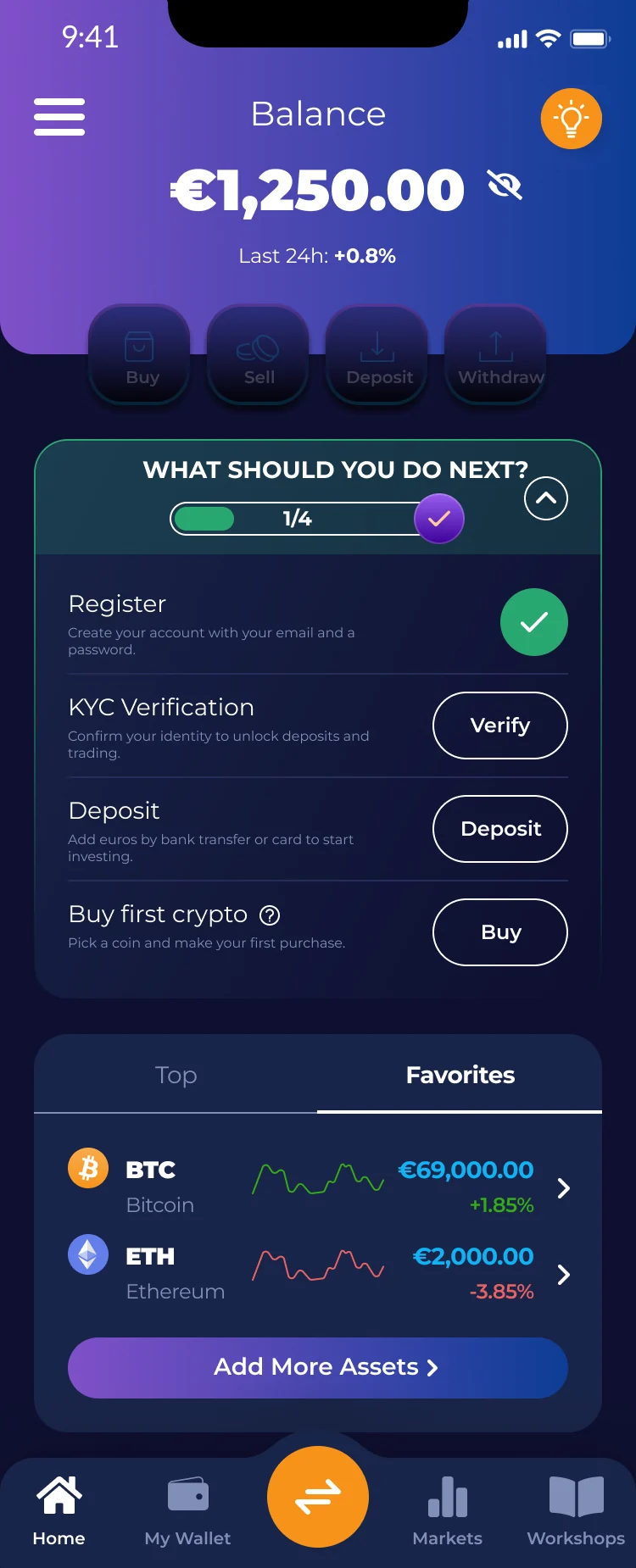
With a custodial service, a provider manages the keys and you sign in with an account. Rumos is powered by a regulated custody partner: in the EU, a crypto-asset service provider licensed by Germany’s financial regulator (BaFin) under MiCA; in the US, a regulated trust company. Your crypto and your cash balance are held with this partner, which uses security built for institutions, for example multi-signature approvals and offline cold storage. You’ll find the partner’s name in the app under Settings. Rumos is a custodial app, so you don’t manage private keys or a recovery phrase yourself.
With self-custody, you hold the keys yourself, usually backed up by a recovery phrase. No platform can lock your account or lend out your crypto (although issuers of some tokens, such as stablecoins, can still freeze them at any address), but nobody can recover your keys for you either.
Neither model is right for everyone; the lesson on custodial and self-custody compares them.
Quick check
Lea deletes her self-custody crypto wallet app. She never wrote down her recovery phrase. What happens to her crypto?
Recap
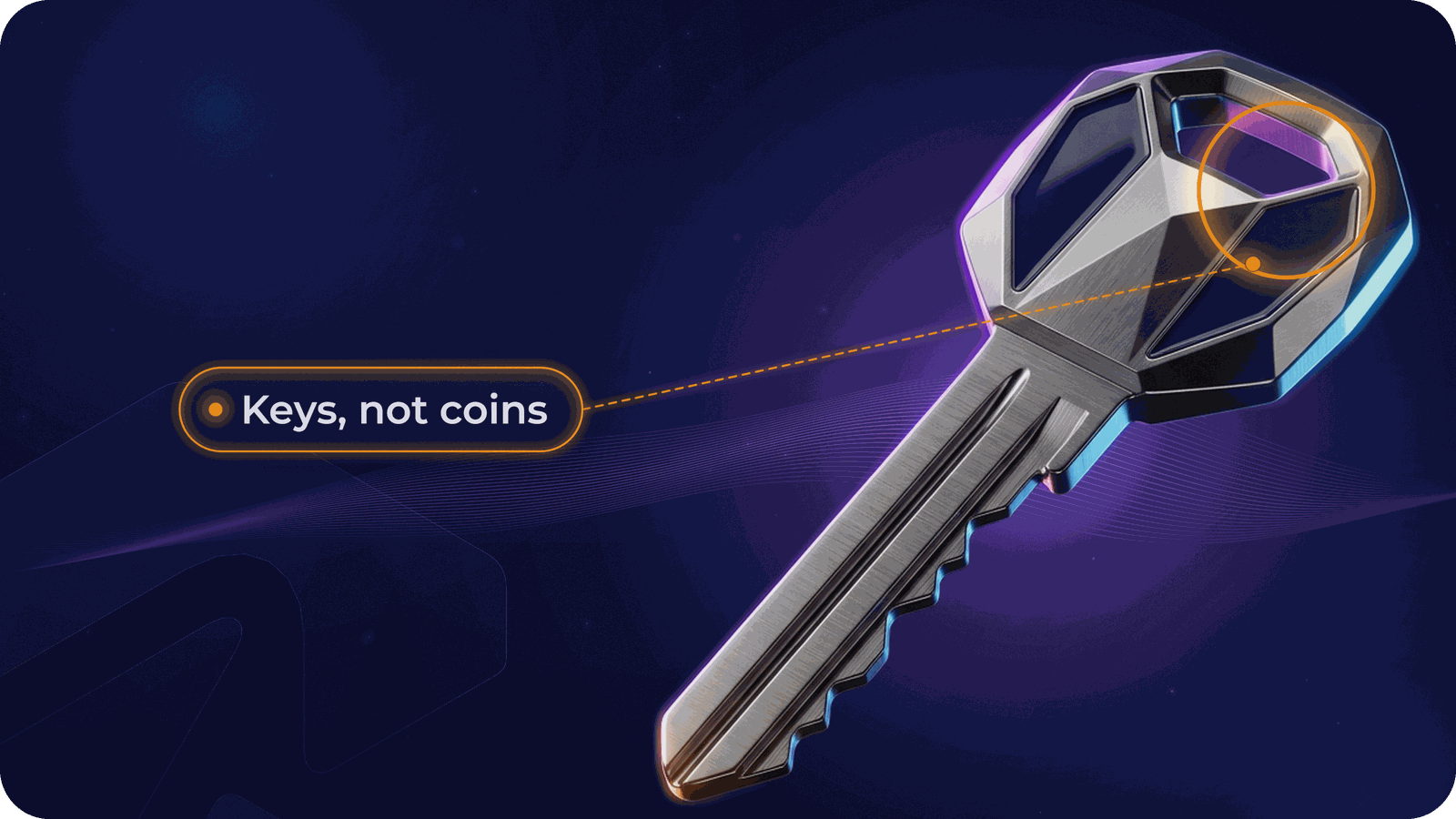
- A wallet stores keys; your crypto is recorded on the blockchain.
- Hot wallets are online and convenient; cold wallets are offline and less exposed.
- Custodial: a provider holds the keys and you protect your login. Self-custody: you hold the keys and the backup.
Next: How does a signature prove it’s really you? Cryptography: The Maths That Protects Crypto
Lesson complete!
0 / 3
That's the first chapter. Continue this course — and unlock the rest — in the Rumos app.